ARTICLES
Category:
E-Commerce Strategy
High-growth D2C fashion isn’t won on the acquisition front anymore. It is won directly in the inbox. True profitability belongs to the elite performance brands that look past generic blasts and focus heavily on advanced email marketing for D2C fashion to turn first-time buyers into high-value loyalists.
The mandate is clear: traffic brought to the store cannot be a leaking bucket. True profitability resides in the secondary and tertiary margins generated well after the initial touchpoint.
Yet, an industry-wide problem persists. A staggering number of fashion retailers settle for basic, unique automation templates. They deploy generic abandon-cart sequences and static newsletter sign-ups designed for standard widgets, completely failing to capture the structural nuances of apparel shopping.
Such as size fragmentation, style preferences, high browse-to-buy intent, and rapid collection cycles. To compete at the highest level, brands must graduate to a sophisticated lifecycle architecture.
Why Standard Automation Fails Apparel Brands (The Strategic Shift)
The Nuances of D2C Fashion Retention
Unlike standard transactional e-commerce categories where consumers purchase based on clear utilitarian utility (such as electronics or consumer packaged goods), apparel acquisition relies on emotional resonance, aesthetic alignment, and rapid trends. The modern customer journey is highly fragmented.
A shopper might view an item five times across three devices, check size charts, browse social validation, and look for styling inspiration before ever adding a piece to their shopping cart. Therefore, building a profitable infrastructure requires a dedicated blueprint for lifecycle email D2C strategy. Treating D2C email automation not as a set of isolated, reactive alerts, but as a continuous, dynamic customer dialogue.
Moving from Batched Blasts to Dynamic Personalization
The legacy approach of blasting an entire subscriber database with identical weekly promotion email marketing for D2C fashion is an operational relic that active brands are rapidly abandoning. It erodes sender reputation, inflates unsubscribe rates, and dilutes brand equity. Elite operators use advanced data infrastructure to gather critical zero-party data such as fit profiles, preferred style cuts, and historical collection interactions directly at the subscription phase. By funneling these granular insights into an intelligent automation engine, DTC performance marketing brands replace generic discounts with hyper-personalized, dynamic product recommendations that adapt contextually based on user behavior.
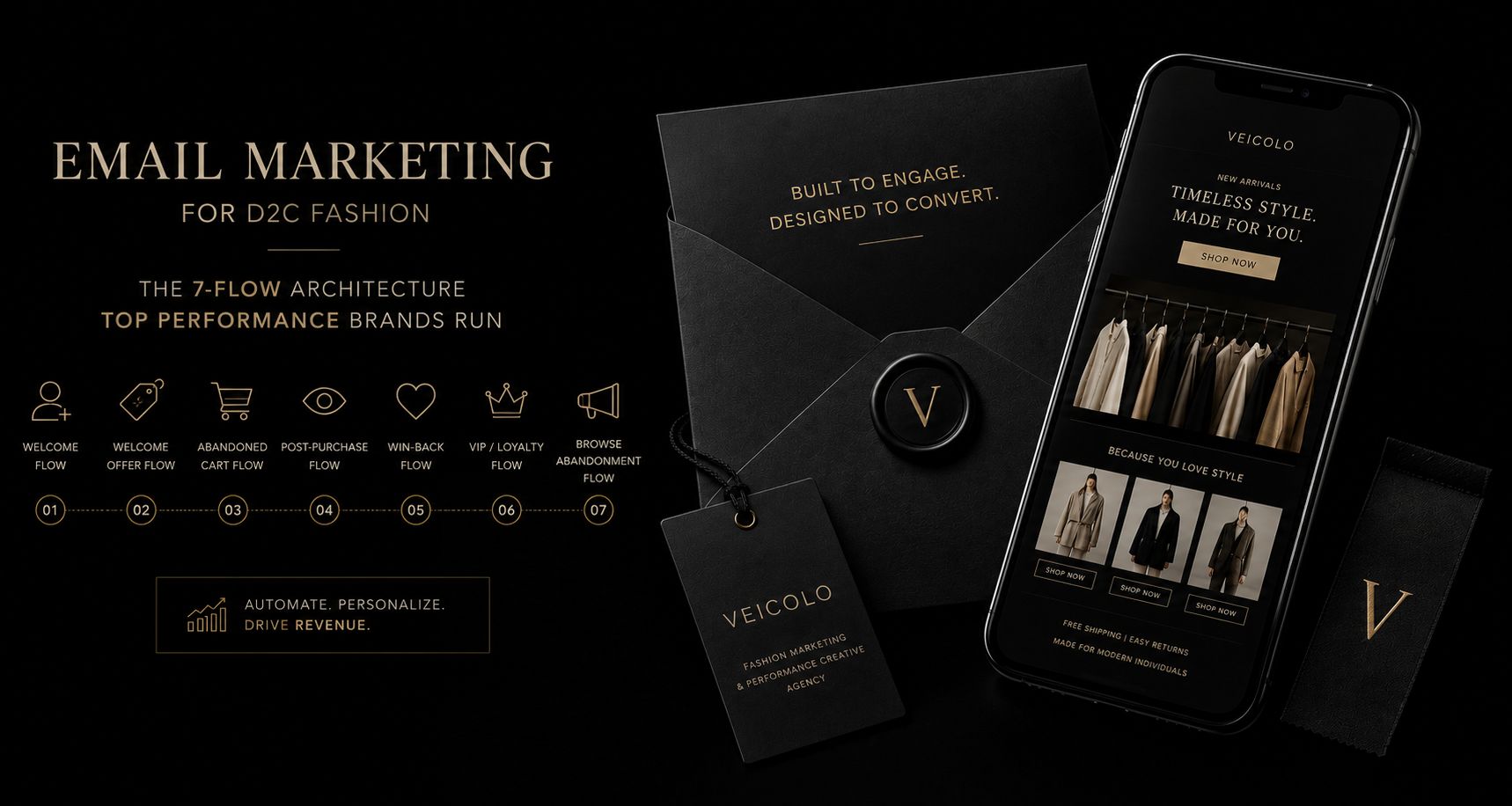
The 7-Flow Architecture of Elite Fashion Brands
To capture every ounce of revenue hidden within your customer lifecycle, your retention program must run a deeply segmented, multi-stage automated architecture. Below is the blueprint of the seven fundamental pillars utilized by elite apparel operators.
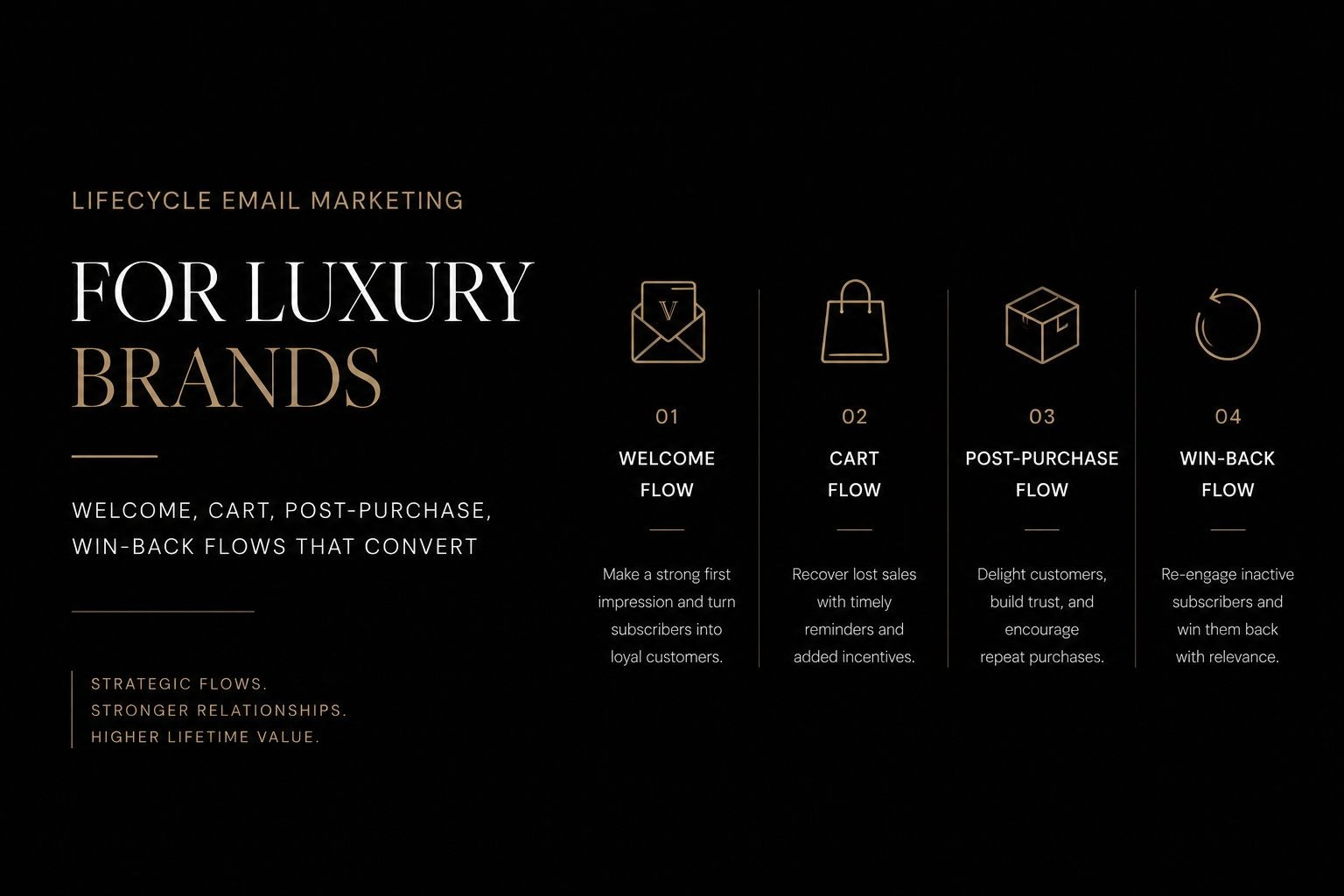
Flow 1: The High-Conversion Welcome Experience
Strategic Focus: The welcome experience is your brand's digital flagship storefront. Its primary objective is to transition a newly acquired lead into a first-time buyer without immediately eroding product margins via heavy, margin-killing discount codes.
Instead of a single email featuring a generic coupon, top brands run a 3 to 4 part narrative sequence. Email one delivers the immediate value prop and introduces the brand's core identity or founding ethos. Email two focuses heavily on social validation, utilizing editorial-style lookbooks, user-generated content (UGC), and explicit community testimonials. Email three tackles the primary obstacle in online apparel purchasing: sizing anxieties. By integrating dynamic interactive fit guides and detailing transparent return policies, this message actively builds purchasing confidence.
Flow 2: The High-Intent Abandoned Cart Sequence
Strategic Focus: This sequence targets your highest-intent audience. Users who have explicitly placed items into their shopping cart but stepped away before confirming checkout.
Elite performance setups avoid sending an immediate discount reminder. Instead, an email goes out within 45 minutes as a helpful, service-oriented inquiry, displaying the exact dynamic items left behind alongside clean typography and styling imagery.
Email two, sent 24 hours later, introduces structural social proof, matching the exact items in the cart with customer reviews.
Email marketing for D2C fashion three, sent at the 48-hour mark, introduces subtle urgency or shifts the angle to highlight practical purchasing perks, such as free shipping thresholds, hassle-free exchanges, or flexible installment payment options.
Flow 3: The Browse & Category Abandonment Trigger
Strategic Focus: Window shopping is incredibly prevalent in online apparel. This flow captures high-intent window shoppers who explore specific product detail pages or collection categories without executing an add to-cart action.
As a foundational element of sophisticated email marketing for D2C fashion, this trigger must feel highly personalized rather than creepy. The sequence should feature a soft, discovery-focused tone. If a user spends time browsing an autumn outerwear collection, the automated follow-up should showcase lifestyle imagery of that exact jacket, curated styling suggestions on how to wear it, and alternative product recommendations within the same category to maximize product discovery.
Flow 4: The Post-Purchase & Next-Buy Driver
Strategic Focus: The transaction doesn't end when checkout is complete; the post-purchase window is a critical period for stabilizing customer lifetime value (LTV).
The first email should purely express appreciation and detail shipping expectations, keeping excitement high. Email two shifts toward utility, delivering localized care guides (e.g., how to wash delicate fabrics or maintain denim structure) to reduce product return rates.
Email three acts as the revenue engine, analyzing the initial purchase data to deliver highly targeted cross-sell recommendations. If a customer purchased a premium cocktail dress, this automated email marketing for D2C fashion triggers 14 days later to recommend matching accessories or a complementary layering piece, moving them seamlessly toward their second purchase.
Flow 5: The "Back-in-Stock" & Price Drop Activator
Strategic Focus: Size fragmentation is a massive structural vulnerability for apparel brands. When high demand items or core sizes sell out, it often leaves immediate demand unfulfilled.
By implementing behavioral waitlists directly on out-of-stock product variants, brands tap into intense consumer FOMO. The moment inventory is replenished via ERP or warehouse management updates, the system immediately fires tailored notifications to the specific segment waiting for that exact size and colorway. Because the intent is already validated, this workflow routinely commands the highest Revenue Per Email (RPE) across the entire retention ecosystem.
Flow 6: The VIP & Loyalty Appreciation Track
Strategic Focus: Across almost all high-growth fashion brands, the top 20% of your customer base accounts for roughly 80% of total revenue. This flow isolates and nurtures that vital cohort.
Customers automatically enter this flow once they cross predefined thresholds, such as a high annual purchase frequency or an exceptional lifetime spend tier. To make these high-value buyers feel exclusive, the messaging strips away standard commercial templates in favor of minimalist, plain-text styling coming directly from the founder or Head of Design. Tactics include providing exclusive early access to upcoming seasonal drops, invitation-only colorways, and surprise loyalty rewards that solidify community ties.
Flow 7: The Win-Back & Sunset Sequence
Strategic Focus: Churn is a natural reality in fast-moving fashion cycles. This multi-tiered sequence systematically identifies lapsing buyers based on predictable churn windows.
The win-back flow initiates an automated re-engagement effort precisely when a customer surpasses their predicted purchase interval (e.g., 90 days post-purchase without another order). The sequence showcases new arrivals, fresh seasonal collections, or offers a compelling incentive to return. Crucially, if a user remains completely unresponsive after the final email marketing for D2C fashion in this sequence, they are systematically routed into a sunset tag. This automated pruning protects overall sender deliverability and keeps the domain reputation pristine.
Advanced Segmentation: Driving Revenue from Fashion Email Flows
Sizing and Preference-Based Triggers
Blasting an active subscriber with an urgent promotional email for clearance items, only for them to click through and discover their specific size is entirely sold out, represents a massive friction point that destroys brand loyalty and inbox engagement. Elite brands apply advanced segment logic directly to their fashion email flows. By organizing dynamic feeds that only display items actively in stock for that specific recipient’s size profile, brands unlock massive conversion rate gains while keeping user experiences intuitive and highly relevant.
Predictive Churn and Purchase Cycles
Sophisticated D2C email automation utilizes advanced data models to project individual customer purchasing intervals. Instead of sending generic reminders, your data layer calculates the historical time elapsed between orders across your catalog. If data shows a customer buys new premium denim every four months, your system can automatically queue up tailored, aesthetic collection teasers at day 105, hitting their inbox exactly when their consideration cycle reopens for a wardrobe refresh.
Measuring What Matters: Retention KPIs for CRM Leads
To evaluate whether your retention architecture is operating optimally, CRM leads must look past superficial metrics like raw open rates, which have become increasingly unreliable due to platform privacy measures. Instead, performance teams measure and optimize against three foundational metrics:
Revenue Per Email (RPE): Evaluates the true economic efficiency of your messaging segments, ensuring you maximize value without burning out your list.
Automated Flow Revenue Share: High-performance D2C brands aim for automated lifecycle flows to drive between 35% and 45%+ of total e-commerce revenue, establishing a highly predictable baseline that operates independently of ad spend.
Repeat Purchase Rate (RPR): Tracks the percentage of first-time buyers who transition into repeat purchasers within a 60, 90, and 180-day window, serving as the ultimate health check for authentic brand scaling.
Scaling Your Email Marketing for D2C Fashion: Build vs Partner
Developing, executing, and continuously optimizing a comprehensive 7-flow lifecycle email D2C framework is an immense operational undertaking. You face an immediate resource bottleneck:
Mapping out high-performing data paths
Maintaining complex webhooks
Crafting premium
Brand-aligned visual design
Writing high-converting copy requires an army of expensive
Specialized internal talent
This is where partnering with a dedicated powerhouse unlocks true leverage. Veicolo operates as an elite retention and lifecycle agency built specifically to help scaling apparel brands transition from basic campaign setups into highly automated revenue engines. By running hyper-targeted data setups, bespoke design iterations, and rigorous A/B testing frameworks tailored directly for the competitive US market, Veicolo eliminates the internal resource bottleneck. Discover how elite brands maximize their ROI by deploying high-converting, tailored fashion email flows and exploring advanced expert email marketing for D2C fashion execution models designed to supercharge your bottom line.
Contact us today to secure a comprehensive, data-driven Retention & Lifecycle Audit.
Conclusion
Building a top-tier email marketing for D2C fashion infrastructure isn’t about sending more volume; it’s about sending the right automated message to the exact right customer at their precise moment of intent. By replacing generic, unsegmented campaigns with this strategic 7-flow architecture, your brand creates a highly predictable, margin-insulated revenue ecosystem that scales independently of expensive paid social.
If you are ready to identify the hidden leaks in your retention setup, clear out operational blind spots, and unlock your true scaling potential, let our team map out your path forward.
FAQs
What is the most profitable email flow for a D2C fashion brand?
While the Abandoned Cart flow yields the highest immediate conversion rate, the Welcome Flow typically generates the highest overall revenue volume by successfully converting fresh, high-intent traffic.
How many emails should be in a fashion browse abandonment flow?
A 2-to-3 email sequence works best. Send the first within 2 hours showing the item, the second 24 hours later with social proof, and a final soft reminder.
Why is lifecycle email D2C fashion different from other industries?
Fashion relies heavily on visual aesthetics, emotional buying, and unique friction points like sizing, fit, and seasonal trends, requiring highly dynamic, personalized data segmentation to convert.
How much revenue should a D2C email automation account for?
Top-performing D2C fashion brands typically generate 35% to 45% of their total e-commerce revenue directly through optimized automated fashion email flows and targeted campaign segments.
Featured Case Study


304 %
Scaled Revenue MoM


4x ROAS
consistently over 6 months


125 %
YoY Meta Spend Growth


304 %
Scaled Revenue MoM
OUR APPROACH
Turning Performance Data
Into Profit Clarity
1. Profit-First Measurement
We start where most growth strategies stop: profit. Campaigns, channels, and products are evaluated against margin, contribution, and cash flow—not surface metrics.
2. Marketing Connected to the P&L
Performance data only matters when it maps to financial reality. We align ad spend, customer acquisition, inventory, and lifecycle value into a single decision-making system.
3. Continuous Financial Optimization
Growth isn’t a one-time model. We monitor performance as conditions change—traffic mix, demand, costs—so decisions stay profitable as you scale.




Want to get similar results?
Our Impact,
By The Numbers
RELATED ARTICLES