ARTICLES
Category:
Paid Ads Strategy
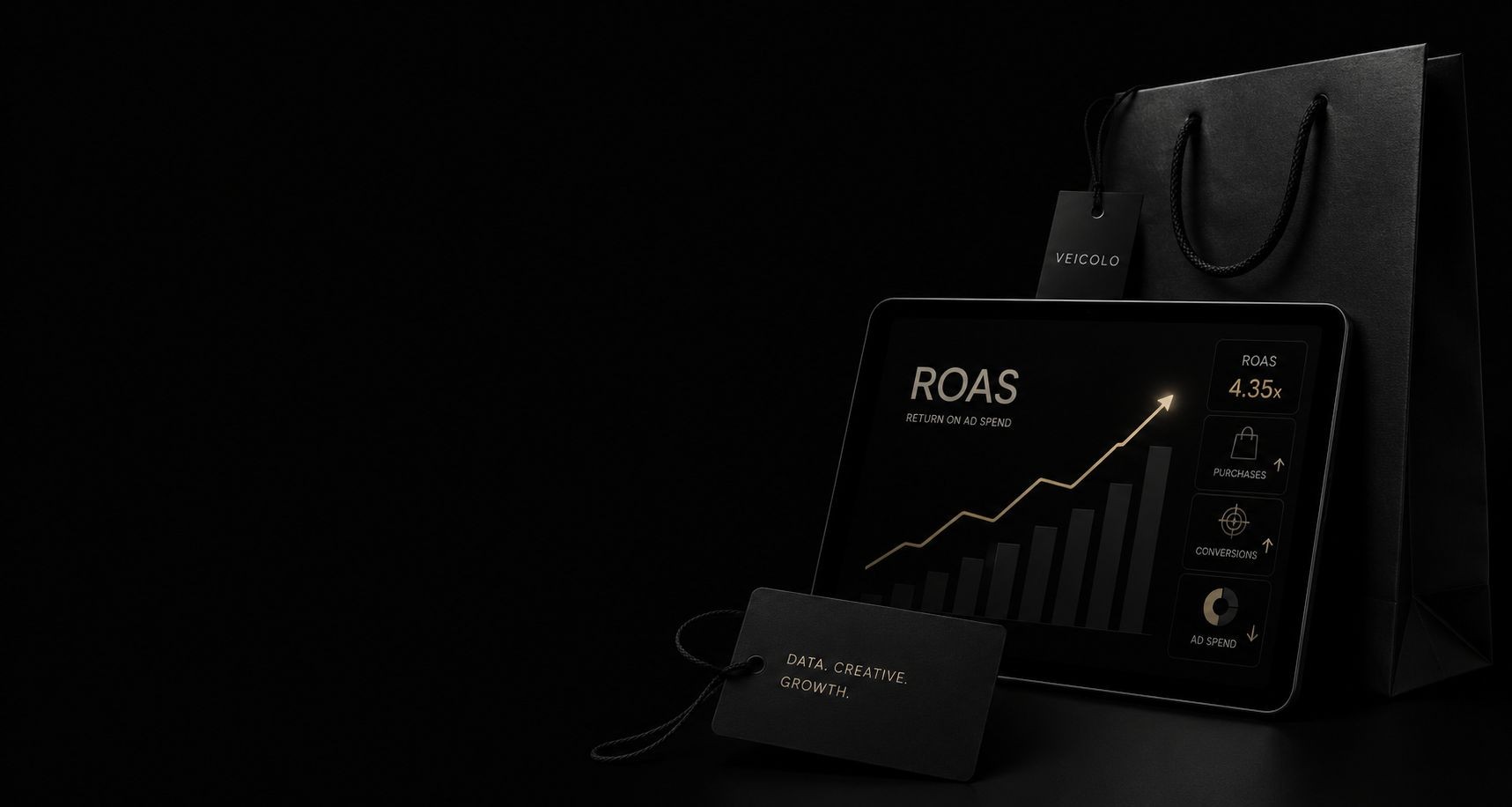
Improving Return on Ad Spend (ROAS) has become one of the biggest challenges for online fashion brands in 2026. Advertising costs continue to rise, consumer attention is scattered, and fashion shoppers expect both style and substance before they commit to a purchase. With shorter trend cycles and increasing competition, fashion brands must adopt smarter, data-backed strategies to keep their ROAS healthy and their campaigns profitable.
This guide breaks down the most effective ways to improve ROAS in fashion advertising, combining performance marketing fundamentals with fashion-specific creative, targeting, and optimization techniques. Whether you’re selling apparel, jewelry, footwear, or accessories, these strategies can help you drive more revenue from the same ad budget.
Why ROAS Matters More Than Ever for Online Fashion Brands
The fashion advertising landscape in the US has evolved dramatically. CPMs on platforms like Meta and TikTok are higher, shoppers are more selective, and online purchases are often influenced by sizing confidence, fabric accuracy, returns, and social proof. A generic advertising strategy simply doesn’t work anymore.
ROAS matters because it directly reflects whether your ads are generating profitable returns. For fashion brands, this metric becomes even more important because:
Ad fatigue happens faster due to fashion trend cycles
Sizing and fit issues lead to higher return rates
Product margins vary widely across collections
Creative quality impacts purchase decisions heavily
This creates a competitive environment where only brands that focus on improving ROAS in fashion advertising — through smarter targeting, better creatives, and stronger post-click experience — consistently profit.
Optimize Fashion Creatives to Improve ROAS in Fashion Advertising
Fashion is one of the few industries where creative quality can instantly make or break ROAS. Visual storytelling, clothing movement, fabric texture, real fit, and lifestyle context heavily influence buying decisions.
Use Fashion-Specific Performance Creatives That Stop the Scroll
Static images alone no longer drive strong ROAS. Today, shoppers expect dynamic, authentic, and narrative-led creativity.
Effective creative formats include:
Short-form video (Reels, TikTok, Shorts)
Try-on hauls and UGC reviews
“3 ways to style this” mini tutorials
Texture close-ups to show fabric quality
Movement shots to highlight drape and fit
User-Generated Content (UGC) is especially powerful because it builds trust faster than polished studio shots. A shopper is more likely to purchase after seeing someone “real” wearing the product.
Refresh Creatives Frequently to Combat Ad Fatigue
Fashion shoppers burn out quickly on repetitive creatives. A declining click-through rate (CTR) or rising CPM indicates the need for fresh assets. Most fashion brands should refresh visuals every 10–21 days.
You can test multiple angles:
Best-selling product angles
Seasonal trends
Mood-based lifestyle clips
Unboxing videos
Editor- or creator-style fashion commentary
Consistent creative testing is often the fastest way to increase ROAS.
Use High-Intent Messaging to Improve Conversion
Fashion ads must go beyond aesthetic visuals. Shoppers want clarity around:
Fit and sizing
Material and comfort
How the item can be styled
Unique selling points (USP)
This reduces hesitation and increases the likelihood of purchase.
Soft Commercial Insert
Specialized performance creative agencies — like Veicolo — often help fashion brands double creative output, test more variations, and rapidly identify winning concepts to boost ROAS faster.
Precision Targeting Strategies to Increase ROAS in Fashion Ads
Even the best creative fails if ads reach the wrong audience. Precision targeting is essential for improving ROAS in fashion advertising, especially in saturated US markets.
Build Funnel-Based Audiences Instead of Generic Demographics
Fashion marketers often waste budget by targeting overly broad audiences. Instead, break targeting into three intent-based layers:
Top of Funnel (TOF) – Awareness
Fashion interest audiences
Lookalikes of top 20% highest spenders
Competitor brand audiences
Trend-based interest clusters (e.g., “streetwear,” “minimalist fashion”)
Middle of Funnel (MOF) – Consideration
Instagram engagers
Video viewers
Website visitors
Collection page viewers
Bottom of Funnel (BOF) – Conversion
Add to cart in last 1–7 days
Product viewers
Wishlist or “save for later” users
Returning customers
TOF drives reach; BOF drives ROAS.
Smart Retargeting Frameworks That Actually Convert
Dynamic retargeting is essential for fashion brands because shoppers often browse many items before choosing one.
High-performing retargeting windows:
1-day: urgency messaging
7-day: social proof, reviews
14-day: new arrivals or incentives
30-day: seasonal drops or bundles
Dynamic Product Ads (DPAs) typically generate the highest ROAS for fashion e-commerce.
Exclusions That Save Budget Immediately
To avoid wasted spend:
Exclude recent purchasers (depending on product lifecycle)
Remove non-buying repeat visitors
Add negative keywords for Google Search (“cheap,” “free,” “wholesale”)
Exclude irrelevant trend watchers who never convert
These steps alone can significantly increase ROAS.
Soft Commercial Insert
Agencies that specialize in fashion funnel segmentation can restructure your Meta and Google campaigns to capture more high-intent shoppers while reducing wasted spend.
Boost AOV to Improve ROAS in Online Fashion Brands
Increasing Average Order Value (AOV) is one of the fastest ways to increase ROAS without spending more on ads.
Use Bundles, Lookbooks, and ‘Complete the Outfit’ Upsells
Fashion is a natural fit for bundling. Examples:
Full outfit bundles
Matching accessory sets
Mix-and-match offers
Capsule wardrobe packages
Bundling boosts AOV by 20–40% for many fashion brands.
Add Threshold Incentives That Increase Cart Value
Examples:
Free shipping above $99
Free accessory for orders above $150
Limited-time “gift with purchase” incentives
These offers encourage shoppers to add more items before checkout.
Post-Purchase Upsells and Personalized Add-Ons
A well-structured post-purchase upsell can increase order value by 10–25% without disrupting the buyer experience. Fashion brands can use tools like one-click upsells or in-checkout recommendations to offer:
Complementary accessories (belts, jewelry, scarves)
Clothing care products (fabric sprays, wash bags)
Matching items already in the cart
Because the customer has already committed to buying, these light-touch offers feel natural and increase AOV — which directly improves ROAS.
Reduce Return Rate — The Hidden ROAS Multiplier
Fashion brands often forget one critical truth: a high return rate destroys ROAS, even when ads appear profitable.
Reducing returns improves your actual profit, not just your ad-platform ROAS.
You can reduce returns by adding:
Accurate size charts
Model measurements (“Model is 5’9 wearing size M”)
Fit-focused videos
Real customer photos
Fabric transparency (“stretchy,” “thick,” “flows well,” etc.)
True-to-color photography
Lower returns = higher contribution margin = higher ROAS.
Optimize Product Feeds, Landing Pages, and Bidding Strategies
Strong creative and targeting get clicks — but the landing page and product feed convert those clicks into purchases. This is where many fashion brands lose ROAS without even realizing it.
Upgrade Your Product Feed for Better Delivery
Your product feed acts as the “brain” behind dynamic shopping ads on platforms like Google Shopping and Meta Catalog Sales.
Improve feed health by:
Using high-resolution product images (front, back, detail close-ups)
Ensuring titles are descriptive: “Women’s Oversized Black Cotton Hoodie – Streetwear Fit”
Including correct product attributes: size, material, color, gender, age group
Adding Google Product Categories accurately
Excluding low-margin or poor-performing SKUs
A clean and optimized feed is often the difference between a 2x ROAS and a 5x ROAS on shopping-based campaigns.
Align Ads With High-Converting Landing Pages (CRO)
Driving traffic is expensive — so every click should experience a fast, clear, mobile-first shopping experience.
Your product page should include:
Clear fabric details
Close-up photo set
True-to-life color accuracy
Detailed sizing guidance
Fast-loading mobile images
Full return and shipping info near the “Add to Cart” button
Trust badges and customer reviews
A mismatch between ad promise and PDP (product detail page) is a top reason ROAS collapses.
Adopt Value-Based Bidding Models for Higher ROAS
Once your feed and landing pages are optimized, shift to value-based strategies like:
Target ROAS (tROAS)
Maximize Conversion Value
Cost Cap with ROAS guardrails
These bidding models allow ad platforms to find high-intent, high-value customers rather than just cheap clicks.
When combined with strong creative and good product pages, these strategies can significantly increase ROAS for online fashion brands.
Fix Tracking & Attribution to Get Accurate ROAS Numbers
Many fashion brands scale the wrong campaigns simply because their tracking is broken. When attribution is inaccurate, ROAS numbers become unreliable.
Essential Tracking Setup for Fashion Brands
Your tracking stack should include:
Meta Pixel + Conversions API (CAPI)
Google Analytics 4 (GA4) with enhanced e-commerce
Accurate UTM parameters
Server-side tracking where possible
Consistent naming conventions for campaigns
Without this setup, you’ll struggle to understand what’s really driving conversions.
Why Most Online Fashion Brands Misread ROAS
Platform ROAS is often inflated due to:
High return rates
Shipping and fulfillment costs
Discount-heavy purchases
Attribution overlap between channels
A campaign showing 4x ROAS in Meta Ads might only be breaking even after returns and shipping. Understanding this gap is crucial.
Metrics to Track Beyond ROAS
More accurate indicators of profitability include:
MER (Marketing Efficiency Ratio)
Contribution Margin ROAS
CAC Payback Period
Repeat Purchase Rate (LTV/CAC ratio)
Fashion brands that optimize for contribution margin instead of surface-level ROAS grow more sustainably and profitably.
When to Scale Your Fashion Ad Spend — and When to Pause
Scaling ad spend too early or without proper signals can destroy ROAS quickly. Use the following framework:
Creative Signals That Indicate Scale
Scale when:
CTR is 1.2%+ on Prospecting
Hook rate is strong
Add-to-cart rate is rising
Frequency is under 2.5
If a creative is performing well at small budgets, it will usually hold performance as you increase spend.
Landing Page Signals Before Scaling
Check:
Add-to-cart > 3%
Product page bounce rate < 45%
Mobile load speed < 3 seconds
If these metrics are weak, scaling will magnify your losses.
Poor ROAS? Diagnose Using This 3-Part Framework
High CTR + Low Purchases → landing page issue
Low CTR + High CPC → creative quality issue
High Purchases but low profit → return rate or AOV issue
This framework helps fashion brands troubleshoot ROAS drops quickly.
How Partnering With a Performance Creative Agency Helps Improve ROAS
Working with a specialized fashion performance agency can significantly improve ROAS because they bring:
Faster creative testing cycles
Access to UGC creators and stylists
Expertise in fashion-specific messaging
Scalable production for Reels, TikToks, and catalog creatives
Experience with seasonality and trend cycles
Data-backed frameworks proven to convert fashion shoppers
Because fashion is visual-first and trend-led, having a creative partner that understands the category often reduces cost per acquisition and increases ROAS more efficiently than simply increasing ad spend.
For many brands, ROAS improves by 20–40% within 60 days after switching to a performance creative and funnel-focused strategy.
Final Checklist: What US Fashion Brands Should Do This Week to Increase ROAS
Quick Wins (0–48 hours)
Exclude recent purchasers
Refresh fatigued creatives
Fix broken PDP links
Add high-intent negative keywords on Google
Improve hero product images
Medium Wins (3–10 days)
Rebuild your retargeting windows
Cleanup product feeds
Add bundle options
Test new hooks and angles
Long-Term Wins (30+ days)
Improve sizing accuracy and fit clarity
Build retention email/SMS flows
Reduce return rate
Implement value-based bidding
Expand creator partnerships
Conclusion
Improving ROAS in online fashion advertising campaigns is no longer about spending more — it’s about spending smarter. Fashion brands that focus on performance creative, precise audience targeting, AOV growth, product feed quality, and seamless shopping experiences consistently outperform competitors.
As US fashion e-commerce becomes more competitive, the brands that win will be the ones that combine creativity with data — and treat ROAS as a holistic, profit-driven metric rather than a vanity number.
If you want help scaling your ROAS with proven performance creative frameworks, refined targeting structures, and fashion-specific optimization strategies, partnering with a dedicated fashion marketing agency can accelerate results dramatically.
FAQs
1. What is a good ROAS for online fashion advertising?
A good ROAS for fashion brands typically ranges between 3x–5x, depending on margins, return rates, and acquisition strategy. Luxury brands may operate profitably at lower ROAS due to higher AOV and stronger margins.
2. How can I quickly improve ROAS in fashion e-commerce ads?
Quick ROAS wins include refreshing ad creatives, fixing product page issues, reducing load time, optimizing your product feed, and excluding recent purchasers to reduce wasted spend.
3. Why does my ROAS drop even when my ads look good?
ROAS usually drops due to creative fatigue, poor landing page experience, inaccurate product feeds, seasonality shifts, or tracking issues. High return rates are another hidden factor that reduce actual profitability.
4. Does better targeting improve ROAS for fashion brands?
Yes — refining targeting with interest buckets, lookalikes, warm audiences, and high-intent segments significantly boosts ROAS. However, creative quality remains the #1 ROAS driver.
5. Can improving AOV help increase ROAS?
Absolutely. Bundles, tiered discounts, post-purchase upsells, and higher-priced hero products can boost AOV, making each acquisition more profitable and improving ROAS.
Featured Case Study


304 %
Scaled Revenue MoM

4x ROAS
consistently over 6 months

125 %
YoY Meta Spend Growth


304 %
Scaled Revenue MoM
OUR APPROACH
Turning Performance Data
Into Profit Clarity
1. Profit-First Measurement
We start where most growth strategies stop: profit. Campaigns, channels, and products are evaluated against margin, contribution, and cash flow—not surface metrics.
2. Marketing Connected to the P&L
Performance data only matters when it maps to financial reality. We align ad spend, customer acquisition, inventory, and lifecycle value into a single decision-making system.
3. Continuous Financial Optimization
Growth isn’t a one-time model. We monitor performance as conditions change—traffic mix, demand, costs—so decisions stay profitable as you scale.




Want to get similar results?
Our Impact,
By The Numbers
RELATED ARTICLES