ARTICLES
Category:
Agency Insider

Luxury fashion marketing fails on paid channels for one reason more than any other: brands import mass-DTC tactics — discounts, urgency, retargeting pressure — into a category whose entire value is built on the absence of those things. Scaling luxury means scaling desire, not discounts. In practice that comes down to three rules: desire-led creative, price integrity everywhere media runs, and ruthless audience curation. Here's how each works.
Why the standard DTC playbook damages luxury equity
The default performance playbook monetizes impatience: countdown timers, welcome discounts, abandoned-cart pressure. For a luxury house, every one of those tactics converts a customer today by borrowing against the brand's pricing power tomorrow. Luxury purchase behavior runs on longer consideration windows, higher research intensity, and acute sensitivity to context — where the brand appears, next to what, saying what. McKinsey and the Business of Fashion's State of Fashion work has tracked luxury's shift toward brand-desirability economics as the category's growth normalizes and pricing power does more of the work [VERIFY + LINK — McKinsey x BoF State of Fashion, latest edition]. The implication for paid media is direct: the ad's job is to deepen wanting, and the funnel's job is to remove friction without ever discounting the want. The contrast is easiest to see in a single placement: a mass-DTC brand retargets a viewed product with "Still thinking it over? Here's 10% off" — and it works, for that brand, because its economics are built on velocity. The luxury version of the same moment shows the garment being finished by hand, names the mill the fabric came from, and offers an appointment. Same pixel event, opposite theories of value. Import the first tactic into the second business and conversion may even rise for a quarter — while pricing power, the asset the entire margin structure depends on, quietly erodes underneath it.
Rule one: desire-led creative at performance cadence
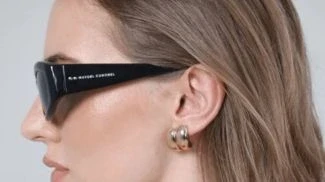
The luxury paradox is that you need performance creative's testing cadence with none of its stereotypical aesthetics. The solve is separating what gets tested from what stays sacred. Test hooks, formats, sequencing, styling context, and proof angles weekly; never test your codes — casting standards, color, typography, retouch level stay locked in written guardrails. In practice the split looks like this: whether the opening frame is the fabric's movement or the atelier's hands is a test; whether the film grades warm or cold is not. Whether the proof element is a press quote or a stylist's note is a test; whether the model list changes is not. Whether the story leads with provenance or with fit is a test; the typography it's set in is not. Written down, the sacred list is usually shorter than founders expect — a page, not a bible — and that page is what lets a luxury account ship at weekly cadence without a single asset the creative director would disown. Across our luxury portfolio (Maygel Coronel, Marina Moscone, Stems Luxury, Julietta), this split is what lets craft-grade creative ship at testing cadence — the system detailed in our performance creative strategy practice and in our Meta-for-luxury playbook.
Rule two: price integrity is a media setting, not just a pricing policy
Full-price sell-through is the metric discounting quietly destroys. Protecting it in paid media means: no discount language in prospecting creative, ever; retargeting that adds information (fit, craft, provenance, styling) instead of pressure; and lifecycle flows built on service and access rather than coupons — private previews, waitlists, appointment invitations (luxury lifecycle email covers the flows). When a luxury client asks where the welcome-discount popup goes, the honest answer is: nowhere; it's replaced by early access. Interest converts on access in this category — and the margin math works because nothing was given away.
Rule three: curation over reach
Luxury doesn't need everyone; it needs the right ten thousand people per market, reached repeatedly in contexts that flatter the brand. That changes channel roles from the standard DTC stack. Meta and Instagram carry the desire-building and the precise prospecting — the formats reward exactly the visual storytelling luxury already produces (targeting options for luxury). Pinterest captures high-intent aesthetic planning — wedding, wardrobe, and occasion behavior that converts months later and gets misread as "unattributable" by brands measuring in seven-day windows. Google's job is defensive and surgical: protect brand terms and harvest the searches the desire work creates. TikTok is a selective storytelling bet where the brand has a genuine voice for it — never a volume channel bought on CPM. Placement exclusions, frequency discipline, and market-by-market curation matter more here than in any other fashion segment — reach bought cheaply in the wrong context is negative-value inventory for a luxury brand. Operationally that means prospecting frequency capped early, placement exclusion lists maintained like brand assets, and budgets set market-by-market rather than platform-wide — the ten thousand right people in Paris and the ten thousand in New York are different campaigns.
The luxury funnel, rebuilt stage by stage
Discovery: desire assets only — campaign-grade film and stills cut to performance anatomy, running in curated placements. No product-grid ads, no price-led headlines; the ad's only job is to make the brand feel inevitable. Consideration: retargeting that adds information instead of pressure — craft and provenance stories, fit and styling content, the atelier, the material. This is where luxury buyers do their research, and the brand that answers questions here wins the purchase later without ever asking twice. Access: the stage where mass-DTC brands deploy the 10%-off popup, and where luxury substitutes access — join the waitlist, book the appointment, see the collection first. Interest converts on privilege, not price, and the email address captured this way belongs to a client, not a coupon hunter. Post-purchase: the unboxing moment feeds referral and content; lifecycle flows carry previews and service, never coupons (the flows in detail). Every stage has a performance job; no stage borrows against the brand to do it.
Measure beyond ROAS or the system eats itself
Managed only to platform ROAS, every luxury account drifts toward discounting and dark-pattern retargeting, because that's what short-window ROAS rewards. The scoreboard that keeps luxury honest: blended MER against contribution margin, full-price sell-through, new-to-brand ratio, and cohort LTV — with brand-search volume as the desire proxy. Run this way, luxury sustains performance economics without equity damage: our luxury portfolio has held 4x+ ROAS over six-month stretches while protecting full-price positioning, and the same discipline underpins the 57-day average break-even we benchmark across clients. For the org model that makes it repeatable, see the scaling pillar; for hands-on help, this is exactly what our luxury fashion marketing practice exists for. [Editor: point this anchor at /luxury-fashion-marketing-agency once the money page is live.]
Concretely, the scoreboard is five numbers reviewed on a fixed rhythm. Blended MER against contribution margin, weekly — the profitability truth platform dashboards can't see. Full-price sell-through, weekly in season — the first metric discounting damages and the last to recover. New-to-brand ratio, monthly — growth that's all retargeting is harvesting, not growing. Cohort LTV at 60/180 days, monthly with finance. And brand-search volume, monthly, as the desire proxy: when it rises while CAC holds, the desire engine is working; when CAC falls while brand search falls too, you're strip-mining the brand. Five numbers, one page, no exceptions for a beautiful campaign — the scoreboard is what keeps desire and discipline in the same business.
FAQs
How is luxury fashion marketing different from regular fashion marketing?
Longer consideration windows, discount-free economics, and context sensitivity. The tactics differ accordingly: desire-led creative instead of urgency, access instead of coupons, curation instead of reach.
Do paid ads work for luxury fashion brands?
Yes — luxury brands sustain 4x+ ROAS in our portfolio — but only with creative built for desire and measurement that includes full-price sell-through, not platform ROAS alone.
Should a luxury brand ever discount?
Public discounting erodes the pricing power the category depends on. Private mechanisms — archive sales, client-only access — clear inventory without teaching the market to wait.
What budget does luxury paid media need?
Less than mass DTC at the same revenue, typically — curation shrinks waste. Structure matters more than size; see our pricing for how engagements are built.
Which channel should a luxury brand start with?
Meta and Instagram first — they carry desire-building and prospecting in one place and produce the signal every other channel feeds on. Add Google brand protection immediately (it's cheap insurance), Pinterest once creative volume supports a second visual channel, and TikTok only when the brand has a storytelling angle it would be proud of there.
Featured Case Study


304 %
Scaled Revenue MoM


4x ROAS
consistently over 6 months


125 %
YoY Meta Spend Growth


304 %
Scaled Revenue MoM
OUR APPROACH
Turning Performance Data
Into Profit Clarity
1. Profit-First Measurement
We start where most growth strategies stop: profit. Campaigns, channels, and products are evaluated against margin, contribution, and cash flow—not surface metrics.
2. Marketing Connected to the P&L
Performance data only matters when it maps to financial reality. We align ad spend, customer acquisition, inventory, and lifecycle value into a single decision-making system.
3. Continuous Financial Optimization
Growth isn’t a one-time model. We monitor performance as conditions change—traffic mix, demand, costs—so decisions stay profitable as you scale.




Want to get similar results?
Our Impact,
By The Numbers
RELATED ARTICLES