ARTICLES
Category:
Seasonal Ad Planning
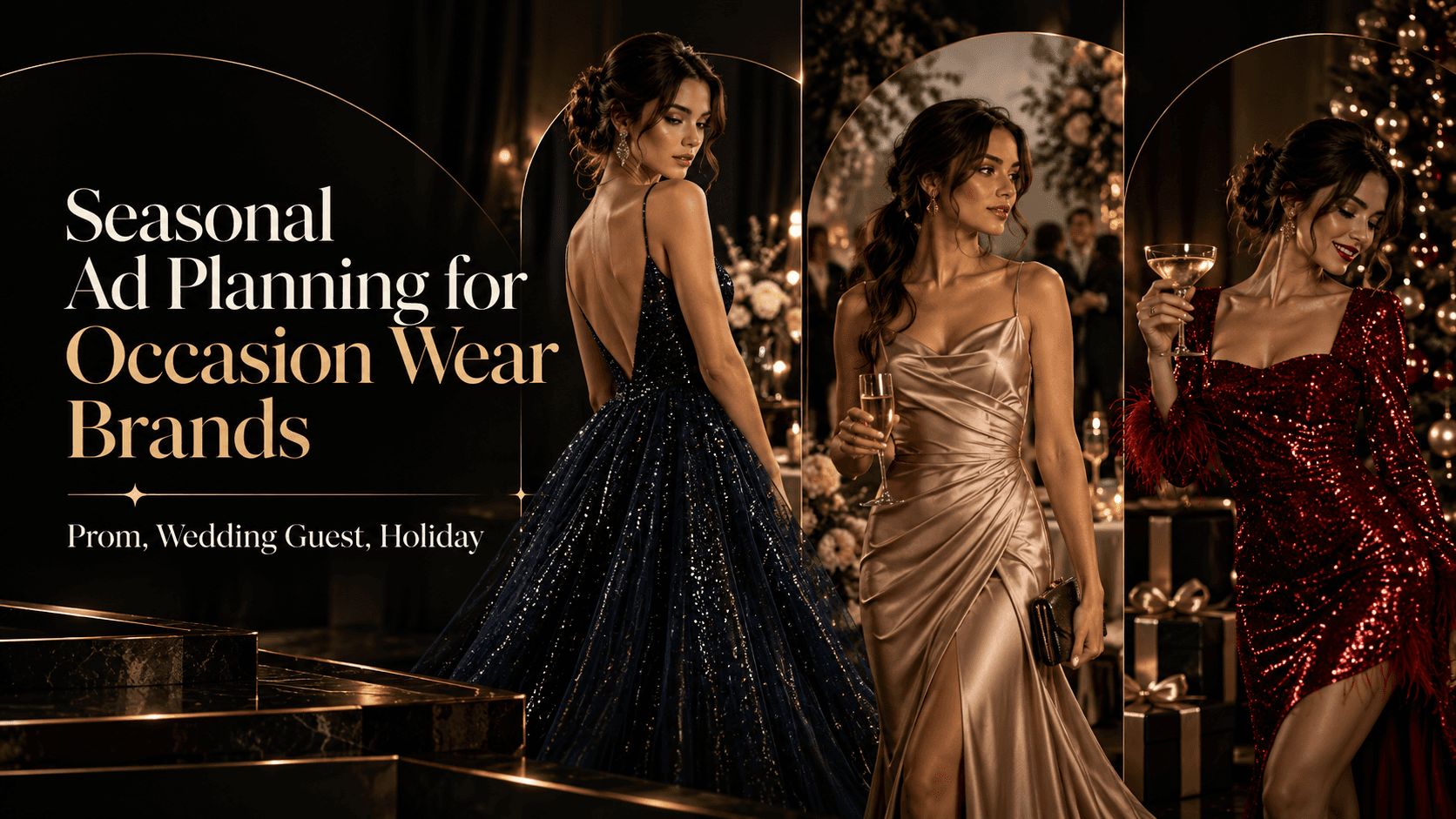
A prom dress that ships a day late isn't just a late order. It's a lost customer, because the event date never moves. Occasion wear runs on fixed deadlines, so guessing at ad timing quickly burns budget. Whether you sell formalwear for spring dances, summer weddings, or December galas, a clear occasion wear marketing strategy keeps your spend aligned with when shoppers actually buy. Well-timed evening wear ads, for example, reach customers before last-minute panic sets in. This guide covers demand windows, a season-by-season plan, channels and creative, measurement, and when outside help makes sense.
Quick Answer
Plan ads backward from each event date. For effective prom dress marketing, start discovery campaigns eight to twelve weeks out, shift to conversion and retargeting as the event nears, and close with shipping-deadline urgency. That timing-first approach is the core of any occasion wear marketing strategy.
Why Timing Decides Your Occasion Wear Marketing Strategy
Before building any campaign, you need to understand how these shoppers actually buy. Occasion wear customers aren't browsing casually. They have a date, a dress code, and a hard deadline, and that changes everything about how ads should work.
Most shoppers move through four stages: inspiration, comparison, purchase, and last-minute panic. Early on, they want ideas and reassurance about fit. Closer to the event, they care about delivery dates, returns, and whether a dress will arrive in time. Google's consumer insights research consistently shows that shoppers research seasonal purchases well before they buy, which is why reaching them early pays off.
The Demand Calendar at a Glance
Use this table as a starting point for your seasonal ad calendar, then adjust it with your own sales data.
Occasion | Discovery window | Peak purchase window | Key ad focus |
Prom | Jan-Feb | Mar-Apr | Style variety, size range, shipping speed |
Wedding guest | Mar-May (summer), Jul-Aug (fall) | 4-8 weeks before the event | Dress codes, venue types, price points |
Holiday and evening | Oct-Nov | Late Nov-mid Dec | Gifting, party looks, delivery cutoffs |
Retail trend data from the National Retail Federation offers useful context on how seasonal spending shifts each year. With the calendar mapped, here's how to shape each season's ad plan.
Your Season-by-Season Occasion Wear Marketing Strategy Calendar
Each occasion has a different buyer, a different emotional trigger, and a different deadline. Treating them as one campaign is the fastest way to water down your results. Instead, build three focused plans.
Prom Dress Marketing: Reaching Teens and the Parents Who Pay
Prom involves two audiences with different priorities. Teens want inspiration and trend appeal, while parents care about budget, returns, and delivery. Strong prom dress marketing speaks to both, often through separate ad sets.
For teens, lean on short-form video, get ready with me content, and school-color or trend-based angles. For parents, highlight easy returns, size ranges, and price transparency. As the event approaches, add urgency with size availability and shipping cutoffs. This dual-audience approach is one of the most practical parts of an occasion wear marketing strategy because it lets you tailor each message instead of relying on one broad ad. Done well, prom dress marketing feels helpful rather than pushy.
Wedding Guest Dress Ads: Speaking to Dress Codes and Venues
Wedding guests shop with a specific question in mind: What do I wear to this? Your ads should answer it. Segment your audiences by venue type, such as beach, black-tie, garden, or rustic, and by season.
Creative built around What to wear to a… prompts tends to resonate because it mirrors real search behavior. Good wedding guest dress ads also use interest-based and lookalike audiences carefully, since engaged couples and their guests are hard to target directly. For a broader sense of what guests are searching for each season, The Knot publishes helpful wedding trend coverage. Pair that insight with clear pricing and delivery information, and your wedding guest dress ads will feel like a shortcut rather than a sales pitch.
Evening Wear Ads That Convert During the Holidays
The holiday season rewards versatility. Shoppers want dresses that work for office parties, galas, and New Year's Eve, so your evening wear ads should show one piece styled multiple ways. Layer in gifting messages and clear delivery cutoffs to keep momentum going as December nears.
Timing matters here too. Launching early-bird offers in October gets you in front of buyers before the holiday ad market gets crowded and CPMs climb. Effective evening wear ads also give shoppers a reason to act now, whether that's limited stock or a guaranteed delivery date.
A calendar only works if the right channels and creative carry it, so let's look at that next.
Channels, Creative, and Budget That Power Your Occasion Wear Marketing Strategy
Even a perfectly timed plan falls flat without the right mix of platforms and messaging. The goal is to match each channel to a stage of the buyer journey, which keeps your occasion wear marketing strategy efficient instead of scattered.
Choosing the Right Channels
Instagram and TikTok: Best for inspiration and discovery, especially with video.
Pinterest: Ideal for long-lead planning, particularly for weddings and prom.
Google Shopping and Search: Captures high-intent shoppers ready to buy.
Email and SMS: Perfect for reminders, restocks, and shipping cutoffs.
Each platform's official resources, such as Meta Business Help and Google Merchant Center, explain current ad formats and product feed requirements.
Creative That Answers Fit and Trust Questions
Formalwear is a high-consideration purchase, and hesitation usually comes down to fit and trust. User-generated content, fit videos, and clear size guides help remove that doubt. Show dresses on diverse body types and in real event settings, not just studio backdrops. This is especially effective in wedding guest dress ads, where shoppers want to picture themselves at a specific venue.
Splitting the Budget by Season
Rather than spreading spend evenly, weight your budget toward each season's ramp-up and its final two weeks. Keep a smaller always-on budget for retargeting, and reserve a testing share for new creative. For instance, prom dress marketing might get its heaviest investment in February and March, then taper sharply once shipping deadlines pass.
Spending wisely also means knowing what's working while there's still time to adjust.
Measuring Results While the Season Is Still Live
Occasion wear seasons are short, so waiting until the end to review performance is too late. Build a simple habit of checking the numbers weekly, and let them guide your next move.
Track return on ad spend (ROAS), customer acquisition cost, and conversion rate by occasion.
Watch add-to-cart to purchase drop-off as shipping deadlines approach.
Compare each season year over year, not just month to month.
Review returns data to spot sizing or expectation gaps.
Feed these insights into next season's plan.
Over time, this feedback loop turns your occasion wear marketing strategy from a set of educated guesses into a system that improves every season. Many brands find that running all of this in-house gets stretched thin, especially during peak weeks.
Scaling Your Occasion Wear Marketing Strategy with Veicolo
Building and running overlapping seasonal campaigns takes time, testing, and steady attention. That's where a specialist partner can help.
When a Specialist Partner Makes Sense
Consider outside support if seasons are overlapping, ROAS has flattened, creative is getting stale, or your team has no bandwidth to test new ideas. Veicolo is a marketing agency that helps fashion and e-commerce brands plan and run seasonal campaigns. For brands scaling their occasion wear marketing strategy, that means having experienced hands on everything from calendar planning to evening wear ads that hit before competitors crowd the feed.
What Working Together Can Look Like
Seasonal campaign planning and calendar building
Paid media management across social and search
Creative direction and testing frameworks
Reporting that ties spend directly to seasonal results
Learn Before You Commit
You don't have to make a decision today. Veicolo offers paid media advertising and fashion e-commerce ads, and they're a good way to build your own knowledge first. When you're ready, reach out for a seasonal planning conversation.
Conclusion
Success in this category comes down to timing, audience, channel, creative, and measurement working together. A dependable occasion wear marketing strategy treats prom, wedding season, and the holidays as three distinct campaigns, each with its own message and deadline. Get prom dress marketing right in the spring, and you build the data and creative habits that carry into summer and winter. If you'd like experienced support building that system, Veicolo is ready to help.
Key Takeaways
Buying windows are short, so timing matters more than budget size.
Each occasion needs its own audience, message, and creative.
Wedding guest dress ads perform best when they address dress codes and venue types.
Measure results by season, not just by month.
The right partner can turn a seasonal scramble into a repeatable system.
Frequently Asked Questions
1. When should occasion wear brands start running prom ads?
Start prospecting ads eight to ten weeks before prom, usually in January or February. Then shift to retargeting and shipping-deadline messaging about four weeks out, when orders peak.
2. How far ahead should wedding guest dress ads launch?
Launch about twelve weeks before peak wedding months, typically March for summer and July for fall. Guests shop early once invitations and dress codes arrive, so early visibility matters.
3. Which platform works best for evening wear ads?
Instagram and Pinterest usually lead for discovery because shoppers browse visually. Google Shopping captures high-intent buyers. Most brands perform best by combining both with retargeting.
4. Can user-generated content really lift occasion wear conversions?
Yes. Photos of real customers at proms, weddings, and parties build trust and answer fit questions, which often improves click-through and conversion compared with polished studio imagery alone.
5. How should occasion wear brands budget across the year?
Weight spend toward each season's ramp-up and final two weeks, keep a smaller always-on budget for retargeting, and reserve roughly ten to fifteen percent for testing new creative.
6. How do you handle returns and sizing concerns in ads?
Address concerns directly with size guides, fit videos, and clear return policies in ad copy and on landing pages, since worry about fit and event deadlines drives most hesitation.
Featured Case Study


304 %
Scaled Revenue MoM


4x ROAS
consistently over 6 months

125 %
YoY Meta Spend Growth

304 %
Scaled Revenue MoM
OUR APPROACH
Turning Performance Data
Into Profit Clarity
1. Profit-First Measurement
We start where most growth strategies stop: profit. Campaigns, channels, and products are evaluated against margin, contribution, and cash flow—not surface metrics.
2. Marketing Connected to the P&L
Performance data only matters when it maps to financial reality. We align ad spend, customer acquisition, inventory, and lifecycle value into a single decision-making system.
3. Continuous Financial Optimization
Growth isn’t a one-time model. We monitor performance as conditions change—traffic mix, demand, costs—so decisions stay profitable as you scale.




Want to get similar results?
Our Impact,
By The Numbers
RELATED ARTICLES