ARTICLES
Category:
Ads, Creative, Content, and Branding
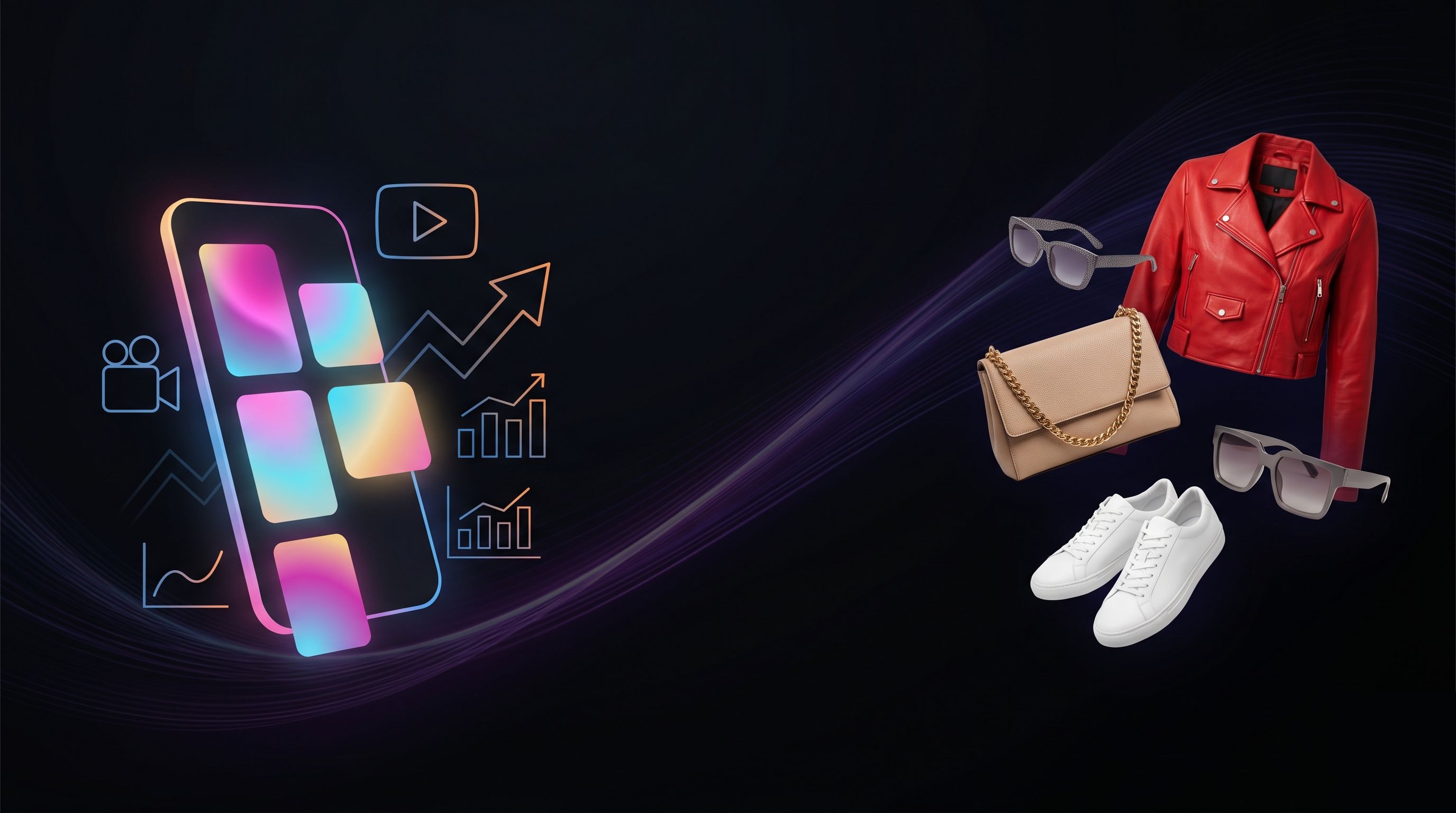
The best TikTok performance marketing agencies use data-driven strategies, creative optimization, and targeted advertising to produce quantifiable outcomes. Paid initiatives that target particular results, such as conversions, sales, leads, or ROI, as opposed to merely raising awareness or engagement, are referred to as TikTok performance marketing. It drives scalable growth for brands by combining Spark Ads, influencer partnerships, native ad formats, and real-time testing.
However, creating arbitrary videos and promoting content aren't the only ways to succeed on TikTok. The algorithm prioritises speed, creativity, and authenticity at a level that most brands find difficult to sustain internally. To convert natural trends into steady income, many expanding companies now collaborate with a TikTok Ad agency for fashion brands.
Through creator-led narrative, high-converting performance creative, and TikTok ads for fashion brands, agencies like Veicolo help fashion companies shift their focus from vanity metrics to scalable sales.
Short Answer
A TikTok performance marketing agency helps fashion brands turn TikTok content and advertising into measurable sales by combining UGC, performance creative, structured testing, Spark Ads, retargeting, and data-driven optimization. Instead of focusing only on views or engagement, the goal is to continuously test creative, identify winning concepts, and scale campaigns based on metrics such as CPA, CTR, watch time, and ROAS.
What Does a TikTok Ad Agency for Fashion Brands Actually Do?
TikTok ads for fashion brands may appear simple at first: record a brief video, add music, and then play an advertisement. But much more structure is needed to scale profitably.
There is more to a specialised TikTok ad agency for fashion brands than just managing advertisements. It creates a whole growth engine designed especially for e-commerce in the fashion industry.
In contrast to ordinary marketing companies, a trendy TikTok marketing business is aware of:
Collections and seasonal drops
Quick cycles of trends
Storytelling driven by style
Culture of influencers and creators
High SKU lists and quick inventory changes
Fashion decisions are quite personal; creatives need to be generated continuously and optimised every week.
Agencies deal with:
Innovative planning and writing
sourcing and managing UGC creators
Production of videos
Purchasing and testing media
Monitoring performance
Funnel Optimisation
They employ a repeatable approach that converts content into steady revenue rather than speculating about what works.
What are UGC ads?
UGC advertisements leverage user-generated content to provide authentic, interesting, and occasionally dynamic content that appeals to and is trusted by potential buyers.
Consider the children's apparel line Deux Par Deux. If you visit their Instagram page, you'll see that many of the advertisements use images submitted by parents of children wearing Deux Par Deux apparel. Although they do feature some modelled content, the majority of their Instagram feed consists of images of "real" customers' children paired with company promotion text.
This same strategy has proven even more effective on TikTok, where TikTok UGC for fashion brands increases engagement and conversions by effortlessly merging into users' feeds with authentic creator-style films and everyday product experiences.
The brand gains from using both staged modelling images and "real" client photos in a number of ways.
It is common for prospective buyers to place greater trust in customer reviews than in brand advertising. The brand highlights this type of social evidence by utilising user-generated content (UGC).
One of the best ways to increase engagement and improve brand/customer connections is to encourage customers to tag the company in their photos.
The content is free! Although Deux Par Deux occasionally offers affiliate promotions, the vast bulk of its user-generated content is entirely free.
But, how can you get UGC ads?
Let's take a look, starting with the important elements of every UGC ad.
Key components of UGC ads
We go over the essential components of each UGC advertisement below.
Core Information
The majority of UGC advertising strategies are based on a single idea. This allows marketers to integrate user-generated content (UGC) into the overarching content theme and helps the brand receive the correct kind of content.
The main idea of the article doesn't need to be difficult. Apple's Shot On iPhone campaign is among the most successful user-generated content initiatives ever. iPhone users tag photos shot with their devices with the hashtag #ShotOniPhone. The marketer can then select any hashtagged image to demonstrate the range of photography that iPhones can produce.
Brand Components
In order for consumers to comprehend what is being promoted, quality user-generated content will obviously include brand elements. This can be accomplished in a number of ways, such as by carefully selecting images and videos that prominently display product branding or by including branded frames and logos in user-generated content.
When Starbucks displays user-generated content (UGC), for instance, it nearly always selects images where its beverages are the main attraction and the well-known brand is visible.
CTA (Call To Action)
Be sure to clearly state what you want your customers to do, such as purchasing your goods, signing up for your newsletter, becoming a member of your loyalty club, etc.
For instance, Sephora, a beauty company, includes obvious product links in user posts so that future buyers can easily buy items they like:
Practical Prompt
It's a wonderful idea to encourage people to produce and submit their own content in addition to a call to action.
Here's an example from Cadbury's Worldwide Hide, a virtual Easter egg hunt where participants use Google Maps to "hide" virtual personalised eggs and then give their loved ones instructions to help them "find" them. This advertisement invites viewers to click through for more thorough directions while succinctly and clearly explaining the idea.
Social Evidence
One of the most crucial components of any UGC campaign, if not the most crucial, is social proof. Therefore, attempt to ensure that the UGC you have selected provides unambiguous evidence of how much your clients adore your product.
The Performance Creative Framework Used by Top Agencies
Being creative is insufficient on its own. When data and creativity come together, the real magic happens.
Creating advertisements that are expressly intended to convert rather than merely look attractive is known as performance creative.
Leading agencies adhere to formalised frameworks.
Hook, Story, Offer
Every video must have:
A powerful hook in the first two to three seconds
A brief narrative or demonstration
A direct offer or call to action
Viewers scroll past in the absence of this framework.
First 3 Seconds Strategy
TikTok is brutal. A video expires if it doesn't immediately attract attention. Agencies test a variety of hooks, such as
“This dress looks better than I thought it would.”
"As soon as you see this brand, stop purchasing basics."
"Point of view: You've at last discovered jeans that fit.
Quick Testing
Every week, agencies test 10-20 creatives rather than releasing one or two ads. Ads that are successful are scaled. Losing ones are swapped out.
Metric-Based Iteration
They keep track of:
CTR
Rate of hooking
Time to watch
CPA
ROAS
What distinguishes scalable TikTok fashion advertising from hobby advertising is this performance mindset.
How a TikTok Ad Agency Builds a Scalable Funnel?
Scaling is methodical rather than haphazard.
Creative Production Engine
Every week, a number of creators create new videos. There is never any stale content.
Testing Campaigns
Winners are quickly identified with small budgets. No significant dangers.
Scaling Successful Advertising
Spending on top performances is increased, frequently for a variety of audiences.
Retargeting
Testimonials or offers are displayed to visitors who interacted but did not purchase.
Spark Ads and Whitelisting
Brands maintain authenticity while expanding their reach by amplifying creator postings straight from their profiles.
TikTok ads for fashion brands may simultaneously increase discovery and conversions thanks to this full-funnel strategy.
Common Mistakes Fashion Brands Make on TikTok
Brands frequently encounter:
Creative Fatigue: The solution requires continuous testing pipelines.
Algorithm Modifications: Agile teams are needed to keep an eye on updates.
Compliance Issues: Following platform guidelines is part of the solution.
Scaling Constraints: The solution uses sophisticated creatives and broad targeting.
A dedicated TikTok marketing agency for fashion avoids these pitfalls by building processes around testing and optimization.
Example Scenario: How a Fashion Brand Scaled 4x with TikTok
Let's say a D2C streetwear company is having trouble keeping up with the escalating costs of Meta ads.
Issues include low engagement, creative weariness, and a high CPA.
Strategy: They collaborate with a TikTok Ad agency for fashion brands.
In the first month, the agency creates 30 user-generated content (UGC) videos with trend-based material, reviews, and stylistic advice. They use Spark Ads to grow winners after launching organised testing campaigns.
Findings after ninety days:
40% less CPA
3-4 times ROAS
Regular daily sales
New drops sell out more quickly.
It was the creative volume and testing discipline that made a difference, not the budget.
When Should You Hire a TikTok Marketing Agency for Fashion?
Not all brands require an agency right away. However, a tipping point exists.
You ought to think about one if:
You make between $20,000 and $50,000 a month.
You are unable to generate enough inventive
Paid advertisements seem erratic.
Your group is not proficient in TikTok.
Growth has slowed down.
At this point, working with a TikTok marketing agency for fashion can accelerate results faster than hiring internally.
What to Look for in a TikTok Ad Agency for Fashion Brands
Not every agency is created equal. Make a thoughtful choice.
Seek out:
Reputable case studies in fashion
An internal creative group
UGC sourcing skills
Performance-oriented approach
Open and honest reporting
Knowledge of TikTok fashion advertising in particular
It is a warning sign if an agency solely discusses impressions or following. The goal should always be sales.
Cost and ROI Expectations
Pricing for agencies varies. Most expensive:
Retainers per month
The proportion of ad spend
Hybrid models
Typically, budgets for advertisements and management fees range from $3k to $5k.
The true measure, however, is return rather than cost.
TikTok ads for fashion brands are among the most effective growth investments accessible since, when done effectively, they frequently result in lower CPAs and higher engagement than traditional channels.
Keep in mind that results are more influenced by creative volume than by financial size.
Key Takeaways
TikTok performance marketing is focused on measurable outcomes: The goal is to drive conversions, sales, leads, and ROI rather than simply increasing awareness or engagement.
Creative is the foundation of TikTok performance: Fashion brands need a consistent flow of authentic, platform-native creative to keep campaigns relevant and prevent creative fatigue.
UGC builds authenticity and trust: Try-ons, hauls, reviews, styling videos, and GRWM content can showcase products in realistic situations and help reduce purchase hesitation.
The first few seconds matter: Strong hooks, concise storytelling, and clear CTAs help capture attention in TikTok's fast-scrolling environment.
Testing creates scalability: Leading teams test multiple creative concepts regularly, identify winners, replace underperformers, and use performance data to guide the next round of creative.
Spark Ads can amplify winning creator content: Brands can extend the reach of effective organic-style creator posts while maintaining a more native TikTok experience.
A full-funnel approach supports sustainable growth: Awareness, creative testing, conversion campaigns, and retargeting should work together rather than operating as isolated activities.
Performance metrics should guide optimization: CTR, hook rate, watch time, CPA, and ROAS help determine which creatives and campaigns deserve further investment.
Creative fatigue requires an ongoing production pipeline: Fashion brands cannot rely on a small number of ads indefinitely; continuous creative development and iteration are essential.
The right agency combines creative and media expertise: A strong TikTok partner should understand UGC sourcing, fashion-specific creative, paid media, testing, optimization, and transparent reporting.
Budget alone doesn't guarantee TikTok growth: The content emphasizes that creative volume and testing discipline can be more important than simply increasing spend.
TikTok can become a scalable acquisition channel: When authentic UGC, performance creative, structured testing, and disciplined scaling work together, TikTok can move beyond awareness and contribute directly to fashion brand revenue.
Conclusion
It takes both creativity and performance discipline to grow fashion brands on TikTok.
TikTok is about systems, not luck or virality.
Consistently successful brands combine:
Genuine TikTok UGC for fashion brands
High level of creativity
Testing based on data
Scaling that is structured
Trying to manage all of this internally can overwhelm small teams. That’s why partnering with a TikTok ad agency for fashion brands—or a performance creative partner—makes sense for labels serious about growth.
When UGC and performance creative are properly balanced, TikTok transforms from a social media site into a reliable source of income.
TikTok should be viewed as a primary acquisition channel, not a test, for fashion brands that are prepared to grow.
FAQs
1. How much money should a company set aside for performance marketing on TikTok?
Effective campaigns typically start at $5,000 to $20,000 per month for testing and optimisation, while budgets vary depending on goals and scale. Greater investments provide faster scaling and wider reach, with ROI directing modifications.
2. What kinds of TikTok UGC for fashion brands convert the most?
Try-ons, style suggestions, hauls, reviews, and GRWM videos are the top-performing TikTok UGC for fashion brands. Customers are more assured about fit, quality, and overall buying decisions because of these formats, which demonstrate real-life usage and foster confidence.
3. How long does it take for TikTok performance marketing to show results?
Creative testing yields preliminary findings after 1-2 weeks. Depending on the budget, level of creativity, and size of the audience, consistent optimisation produces scalable results in 4-8 weeks.
4. How does a TikTok Ad agency for fashion brands scale campaigns profitably?
A TikTok Ad agency for fashion brands grows by utilising retargeting and Spark Ads, recognising top performers, trying several creatives every week, and boosting ad spend on winners. This methodical procedure lowers risk while gradually increasing conversions and return on assets.
5. Is TikTok fashion advertising suitable for small or emerging fashion brands?
Yes, since the algorithm favours interesting content over large spending, TikTok fashion advertising is perfect for smaller firms. With the use of targeted advertisements and creative user-generated content, even new labels can quickly become visible and compete with more established brands.
Featured Case Study


304 %
Scaled Revenue MoM


4x ROAS
consistently over 6 months

125 %
YoY Meta Spend Growth


304 %
Scaled Revenue MoM
OUR APPROACH
Turning Performance Data
Into Profit Clarity
1. Profit-First Measurement
We start where most growth strategies stop: profit. Campaigns, channels, and products are evaluated against margin, contribution, and cash flow—not surface metrics.
2. Marketing Connected to the P&L
Performance data only matters when it maps to financial reality. We align ad spend, customer acquisition, inventory, and lifecycle value into a single decision-making system.
3. Continuous Financial Optimization
Growth isn’t a one-time model. We monitor performance as conditions change—traffic mix, demand, costs—so decisions stay profitable as you scale.




Want to get similar results?
Our Impact,
By The Numbers
RELATED ARTICLES