ARTICLES
Category:
Ads, Creative, Content, and Branding

The majority of fashion companies fail because their advertisements stop working, not because their items are subpar. It is dangerous to rely on a single winning advertisement in today's competitive environment. Audiences grow weary, trends change rapidly, and what worked last month might not work today.
A unique testing framework is crucial in this situation. Brands that scale successfully rely on rigorous creative testing for fashion to consistently find high-performing creatives rather than speculating about what might work. Scaling becomes costly and unpredictable without this system.
You need a repeatable method in addition to talented creatives if you want to scale your fashion brand sustainably. This article will explain how a creative testing framework functions, why it's essential for development, and how to achieve good performance
What Is a Creative Testing Framework?
A structured method for methodically testing various ad creatives is called a creative testing framework. This strategy emphasises making data-driven decisions rather than running sporadic advertisements and waiting for results.
At its core, creative testing ads help brands identify what actually resonates with their audience. It does away with guesswork and substitutes a repeatable technique that gradually increases performance.
Key Elements of Creative Testing Framework
Testing based on hypotheses: Every creative is introduced knowing exactly what is being tested.
Innovative variables: Hooks, forms, images, and messaging
Cadence testing: Frequent and reliable testing cycles
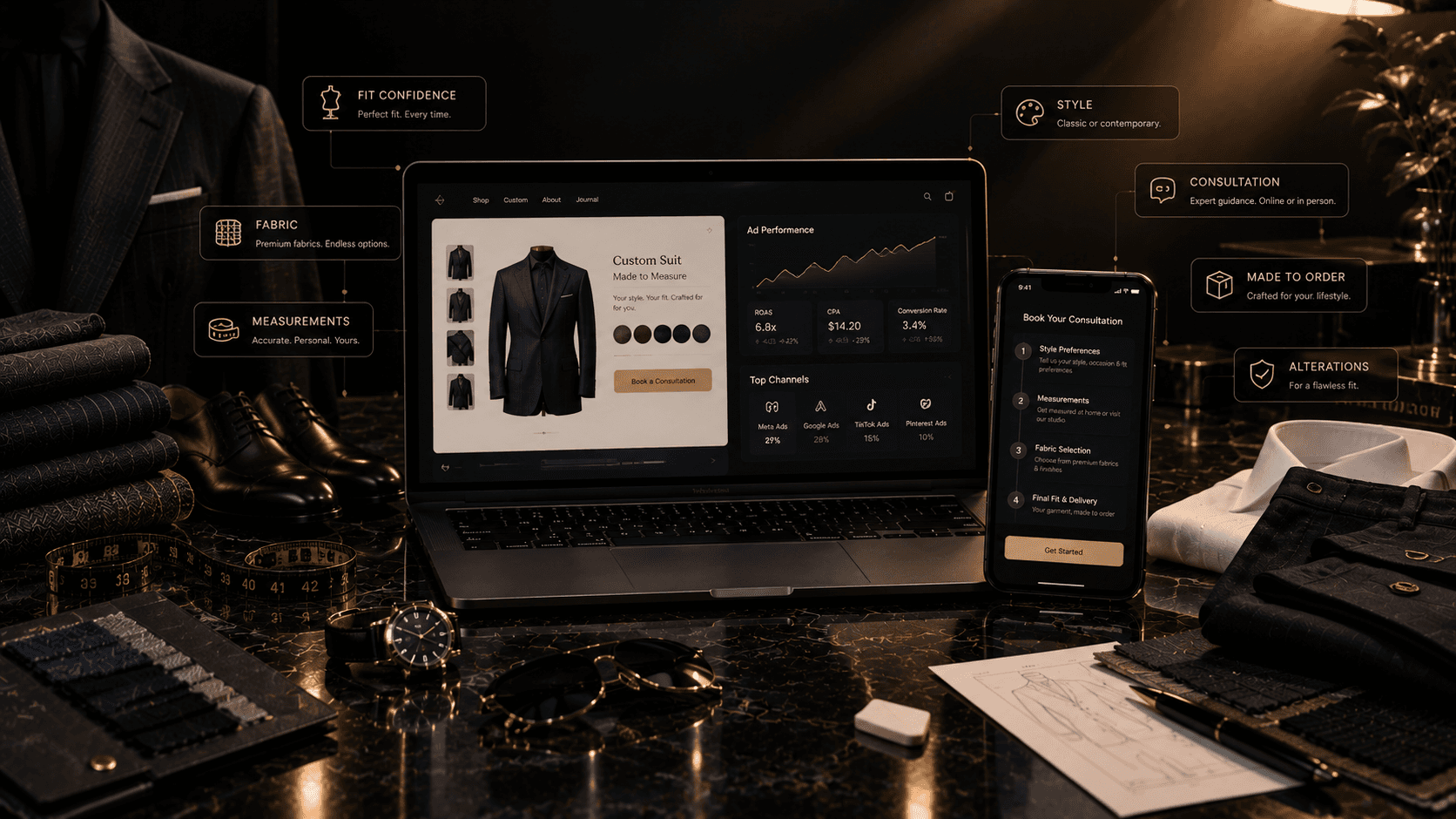
Monitoring performance: CTR, CPA, and ROAS measurements
Why It Matters for Performance Creative Strategy
Insights, not presumptions, are the foundation of a successful performance creative strategy. Brands can continuously enhance their messaging, increase engagement, and cut expenses by implementing a creative testing strategy. This is the cornerstone of long-term growth and successful creative testing for fashion.
The Role of Creative Testing in Fashion Brand Scaling
Most fashion brands are unaware of how important creatives are to the growth of their businesses. Better creatives result in more reach and reduced expenses since algorithms on platforms like Meta and TikTok give priority to Meta ads and TikTok ads that perform well.
An effective methodology for creative testing enables brands to:
Find winning creatives more quickly
Expand campaigns with assurance
Continue to perform as trends change
A fashion advertisement has a brief lifespan. What is effective today could become tiresome tomorrow. For this reason, ongoing creative testing is crucial in the fashion industry. Companies that regularly spend on testing perform better than those that only sometimes experiment.
Why Most Fashion Brands Struggle with Creative Testing
Many brands neglect to put in place a successful framework for creative testing, despite its significance. Lack of structure is the main problem.
Some common issues are:
Too many variables are being tested at once
Insufficient testing of creatives
Terminating tests prematurely
Disregarding performance information
Creative testing for fashion becomes disorganised and ineffective in the absence of a suitable system. This raises the expense of advertising and hinders the growth of fashion brands.
The reality is simple: inconsistent results lead to a poor performance creative strategy. Without clear insights, brands that don't prioritise formal testing frequently wind up overspending.
Key Components of a High-Performing Creative Testing Framework
You must concentrate on the appropriate elements to construct an effective framework for creative testing.
1. Creative Volume
Your chances of identifying winners are increased when you test more creatives. Aim to release several creatives each week for efficient fashion creative testing.
2. Structured Testing Angles
Test certain angles rather than haphazard concepts:
Issue vs resolution
Product-focused vs lifestyle
Informational vs emotional
This methodical approach to your performance creative plan is strengthened.
3. Testing Timeline
Allow adequate time for your creatives to produce insightful data. Your creative testing framework will yield trustworthy insights if you follow a regular schedule.
4. Data-Driven Decisions
Monitor important metrics such as:
CTR
CPA
ROAS
Your creative testing strategy is guided by these KPIs, which also aid in optimising your efforts to scale your fashion business.
Types of Creatives Fashion Brands Should Test
It is necessary to experiment with various formats and styles to conduct effective creative testing for fashion.
Key Creative Categories:
UGC (User-generated content): Relevant and genuine
Influencer-style video: Gains trust fast
Product-focused ads: Clearly highlight features
Lifestyle narrative: Establishes an emotional connection
Problem-solution ads: These advertisements target the problems of customers.
You can test across several categories rather than just one format if you have a solid creative testing framework. This diversity boosts your chances of success and enhances your performance creative strategy.
Step-by-Step Process to Build a Creative Testing Framework
Creating a solid framework for creative testing doesn't have to be difficult, but it does need structure and consistency. Here is a straightforward, step-by-step method to use:
Step 1: Define Clear Testing Objectives
Determine your goals first. Clear objectives provide guidance to your creative testing for fashion and guarantee targeted efforts, whether they are cutting CPA, increasing conversions, or improving CTR.
Step 2: Identify Important Variables for Testing
Select particular components, such as hooks, images, formats, or messaging, to test. You can determine what actually affects performance by testing one or two factors at a time.
Step 3: Launch a Specific Test
Run distinct campaigns for testing purposes only. To preserve accurate data and insights, set aside a limited budget and refrain from combining testing with scaling efforts.
Step 4: Analyse Performance Data
Analyse outcomes utilising important measures such as ROAS, CPA, and CTR. To properly identify winning and underperforming creatives, a great performance creative strategy depends on data.
Step 5: Create Successful Creatives
Increase the budget of the best-performing ads over time. For improved fashion brand scalability, use these findings to improve upcoming campaigns and fortify your framework for creative testing.
How Often Should You Test Creatives?
When it comes to fashion creative testing, consistency is essential. Testing ought to be a continuous process.
Suggested Frequency:
Every week, introduce five to ten new creatives.
Evaluate performance every three to seven days.
Regular testing guarantees that your creative testing framework can adjust to evolving audience behaviour and trends. For a fashion firm to scale sustainably, this consistency is essential.
Real Example: How Creative Testing Drives Profitability
As part of its framework for creative testing, let's say a brand releases ten creatives. Two of these do quite well.
By making those two creatives larger:
CPA decreases
ROAS increases
Revenue grows
This is the fashion industry's use of organised creative testing. Brands make judgements based on facts rather than chance. This method greatly enhances the performance creative strategy over time.
How Creative Testing Impacts Ad Costs and ROI
Your creatives directly impact your advertising expenses. Improved creatives result in:
Reduced CPC
Reduced CPM
Reduced CPA
You can regularly create high performing creative ads if you have a solid foundation for creative testing. This boosts productivity and encourages the growth of sustainable fashion brands.
To put it simply, the profitability of your campaigns and the amount you pay for results are determined by your performance creative strategy.
Tools and Systems to Manage Creative Testing
The proper procedures and tools are needed to manage a creative testing framework.
Useful Systems:
Tracking performance dashboards
Creative management tools
Data analysis platforms
Companies that collaborate with a performance marketing agency like Veicolo frequently use structured techniques to optimise their framework for creative testing and boost execution effectiveness. This method guarantees quicker testing and better outcomes for fashion-related creative testing.
Final Thoughts: The Growth Engine Is Creative Testing
An innovative testing strategy is necessary if you desire steady progress.
Brands may consistently and scalably improve their performance creative strategy with the help of a robust framework for creative testing. The best course of action for any firm that is serious about scaling its fashion brand is to invest in rigorous creative testing.
The secret is straightforward: scale wisely, optimise regularly, and test consistently.
Concentrate on developing a solid performance creative strategy supported by a trustworthy creative testing framework if you want to achieve true growth.
FAQs
What makes creative testing crucial for fashion brands?
Fashion brands may uncover high-performing advertising more quickly, cut down on wasteful spending, and enhance outcomes by using creative testing. It is essential for the steady growth of fashion brands and improved marketing effectiveness.
How many creatives should I test each week?
Brands should test at least five to ten creatives each week in order to conduct effective creative testing for the fashion industry. This guarantees sufficient information to determine winners and consistently enhance performance.
Which kinds of creatives are most effective for fashion ads?
Product-focused creatives, lifestyle content, and user-generated content (UGC) videos work best. To determine which format appeals to the target audience the most, a successful performance creative approach experiments with many formats.
How long should I test creatives before scaling?
Depending on traffic and budget, most creatives should be evaluated for three to seven days. This enables the gathering of sufficient data to enable confident decision-making prior to growing successful advertisements.
Featured Case Study


304 %
Scaled Revenue MoM


4x ROAS
consistently over 6 months


125 %
YoY Meta Spend Growth


304 %
Scaled Revenue MoM
OUR APPROACH
Turning Performance Data
Into Profit Clarity
1. Profit-First Measurement
We start where most growth strategies stop: profit. Campaigns, channels, and products are evaluated against margin, contribution, and cash flow—not surface metrics.
2. Marketing Connected to the P&L
Performance data only matters when it maps to financial reality. We align ad spend, customer acquisition, inventory, and lifecycle value into a single decision-making system.
3. Continuous Financial Optimization
Growth isn’t a one-time model. We monitor performance as conditions change—traffic mix, demand, costs—so decisions stay profitable as you scale.




Want to get similar results?
Our Impact,
By The Numbers
RELATED ARTICLES