ARTICLES
Category:
Ads, Creative, Content, and Branding
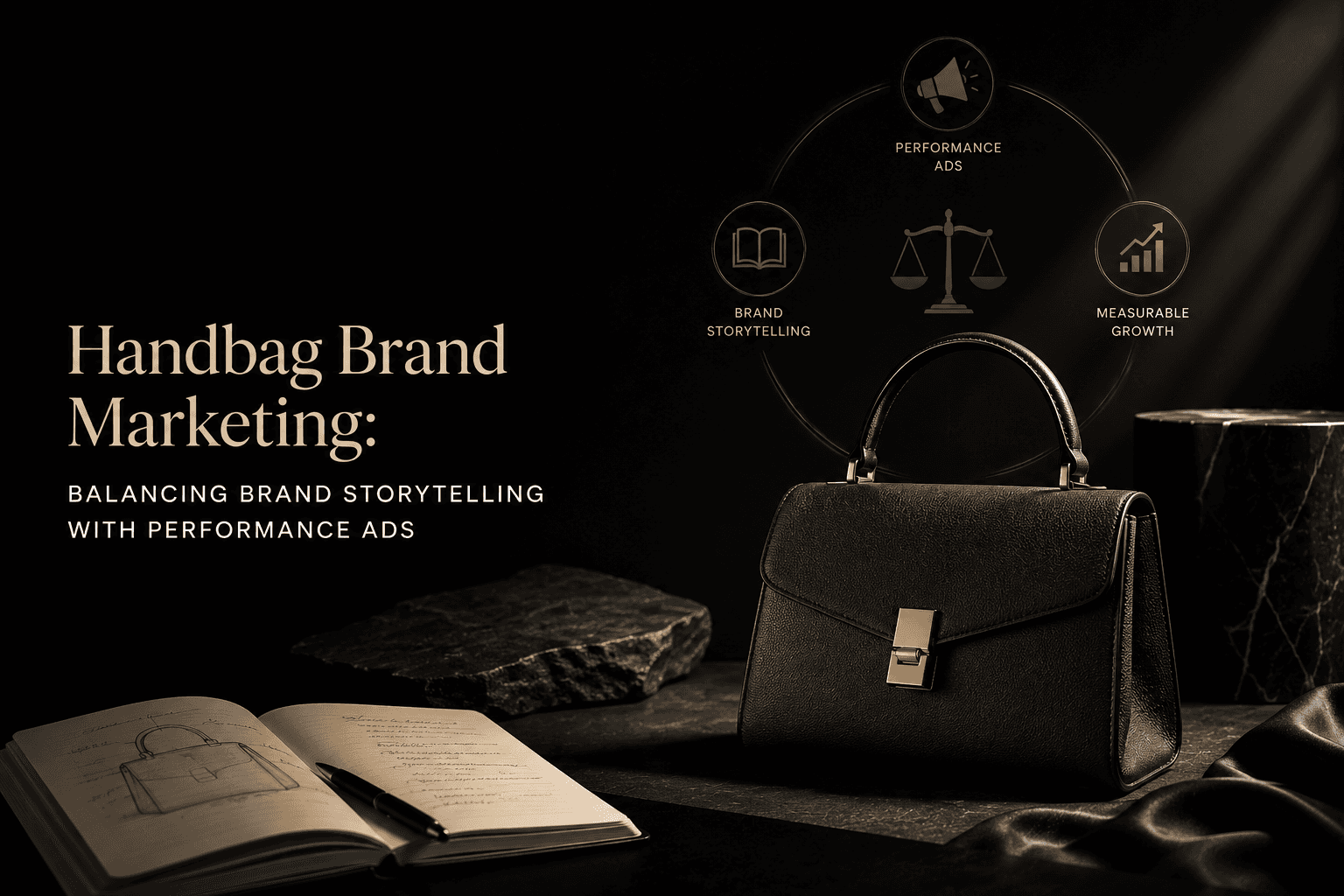
Handbag brand marketing requires balancing emotional storytelling with performance-driven advertising to build brand equity while driving sales. Successful luxury accessories marketing combines compelling narratives about craftsmanship and heritage with targeted campaigns that convert browsers into buyers through strategic audience targeting and conversion optimization.
Handbags occupy a strange spot in ecommerce. They're part fashion statement, part investment, and buyers want both an emotional reason to want the bag and a practical reason to buy it today. This is exactly where handbag brand marketing tends to break down: brands lean too hard into one side and lose the other.
This guide covers how handbag brand marketing brings storytelling and performance ads together rather than pitting them against each other, why handbag brand storytelling shouldn't be sacrificed for short-term return on ad spend, and how leather goods ads can convert without making a premium product feel like a clearance item and all while staying grounded in the realities of luxury accessories marketing.
What is Handbag Brand Marketing?
Effective handbag brand storytelling goes beyond product features to create emotional connections with customers. Luxury handbag brands must communicate their unique value proposition through multiple touchpoints while maintaining consistent messaging across all channels.
The handbag market operates on both rational and emotional purchase drivers. Customers buy based on quality, functionality, and status, but they also seek brands that align with their personal identity and aspirations. This dual nature requires a marketing approach that addresses both practical benefits and emotional desires.
Performance advertising focuses on measurable outcomes like click-through rates, conversion rates, and return on ad spend. These campaigns target specific customer segments with product-focused messaging designed to drive immediate action. Meanwhile, brand storytelling builds long-term equity through content that showcases craftsmanship, heritage, and lifestyle associations.
The most successful handbag brands integrate both approaches. They use storytelling to create brand preference and performance ads to capture demand when customers are ready to purchase. This combination maximizes both short-term sales and long-term brand value.
The Step-by-Step Approach in Handbag Brand Marketing
Step 1: Start by defining your brand story and positioning. Identify what makes your handbag brand unique in the crowded luxury accessories marketing landscape. Consider your craftsmanship heritage, design philosophy, target customer lifestyle, and brand values. Document these elements in a brand guide that will inform all marketing efforts.
Step 2: Create compelling brand content that brings your story to life. Develop videos showcasing artisan craftsmanship, photography highlighting product details and lifestyle contexts, and written content explaining your brand's heritage and values. This content should evoke emotions while subtly communicating product benefits.
Step 3: Set up performance advertising campaigns across relevant digital platforms. Focus on Google Ads for search intent, Facebook and Instagram for visual product showcase, and Pinterest for inspiration-driven discovery. Create ad sets targeting different customer segments based on demographics, interests, and purchase behavior.
Step 4: Structure your leather goods ads with clear product imagery, compelling headlines, and strong calls-to-action. Use dynamic product ads to retarget website visitors with specific products they viewed. Implement conversion tracking to measure campaign effectiveness and optimize for your most valuable customer actions.
Step 5: Balance storytelling elements within performance campaigns. Include brand story elements in ad copy while maintaining focus on conversion. Use video ads that showcase both product features and brand narrative. Test different creative approaches to find the optimal balance between brand building and performance.
Step 6: Implement a measurement framework that tracks both brand and performance metrics. Monitor brand awareness, consideration, and sentiment alongside conversion rates, cost per acquisition, and return on ad spend.
Step 7: Optimize campaigns based on performance data. Adjust targeting, creative elements, and budget allocation based on what drives the best results. Test different messaging approaches to find the right balance between brand storytelling and performance focus for your specific audience.
Common Mistakes To Avoid in Handbag Brand Marketing
Avoid focusing exclusively on either brand storytelling or performance advertising. Brands that only tell stories without driving conversions struggle with sales. Those that only focus on performance miss opportunities to build lasting brand equity and customer loyalty.
Don't neglect mobile optimization. Handbag shoppers frequently browse and purchase on mobile devices. Ensure your ads, landing pages, and checkout process work seamlessly across all devices. A poor mobile experience can significantly impact conversion rates.
Resist the temptation to copy competitor strategies without understanding your unique positioning. What works for established luxury brands may not work for emerging handbag companies. Focus on your authentic brand story rather than mimicking others.
Avoid inconsistent messaging across channels. Your brand story should remain consistent whether customers encounter it through social media, search ads, or email marketing. Mixed messages confuse customers and weaken brand perception.
Don't ignore the importance of visual consistency. Handbags are visual products, and inconsistent photography styles or brand aesthetics can undermine perceived quality and brand credibility.
Tools and Templates
Use Google Analytics and Facebook Pixel to track customer journeys from awareness to purchase. These tools help you understand how storytelling content and performance ads work together to drive conversions.
Implement customer relationship management systems to track customer lifetime value and segment audiences for targeted campaigns. Understanding your most valuable customers helps optimize both storytelling content and performance ad targeting.
Leverage social listening tools to monitor brand mentions and customer sentiment. This feedback helps refine your brand story and identify opportunities for performance campaign optimization.
Create content calendars that balance brand storytelling with promotional content. Plan seasonal campaigns that integrate both approaches, such as holiday gift guides that combine lifestyle storytelling with product-focused calls-to-action.
Use A/B testing platforms to optimize ad creative and landing pages. Test different combinations of brand story elements and performance-focused messaging to find the most effective approach for your audience.
Building a Handbag Brand Marketing Funnel That Balances Both
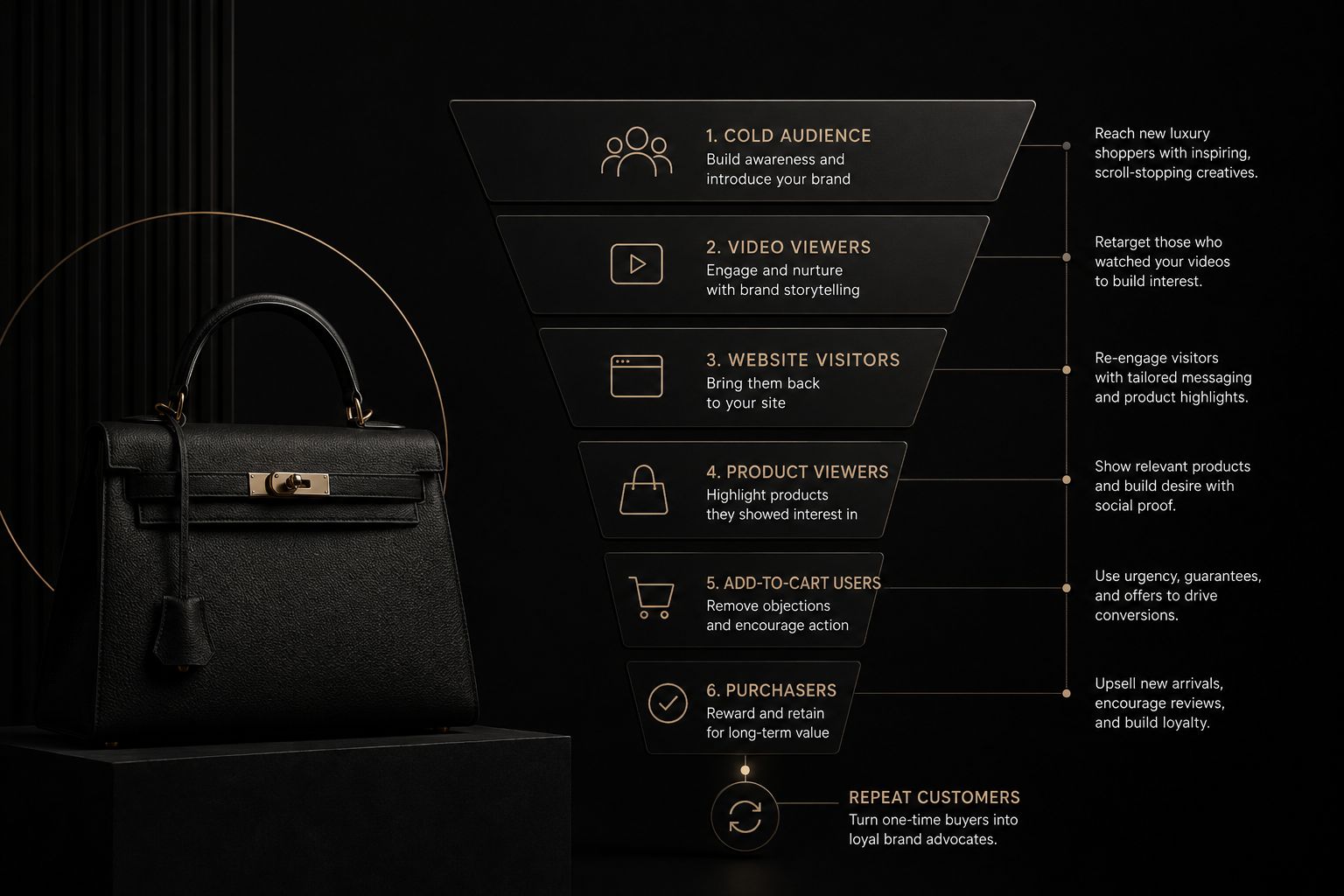
Effective handbag brand marketing isn't about choosing between story and performance. It's sequencing them so each does the job it's actually best at, at the stage of the funnel where it matters most.
Top funnel: brand story content, founder narratives, and craftsmanship features that build desire and awareness before anyone has purchase intent
Mid funnel: retargeting with lifestyle and editorial-style product ads that reinforce desirability while nudging toward consideration
Bottom funnel: cart abandonment ads, limited restock alerts, and early access offers that convert without leaning on discounts as the only lever
This is where most handbag and accessories brands quietly lose money. Treating every ad like a bottom-funnel ad regardless of who's actually seeing it, or running only top-funnel content and hoping it eventually converts on its own. Managing that sequencing consistently across platforms is a heavier lift than it looks, which is often where dedicated paid media advertising services start to matter for brands scaling past their first few campaigns.
How Veicolo Approaches Handbag Brand Marketing for Premium Labels
Everything above is the framework. What it looks like when it's run well is a different question, and it usually comes down to execution details that are easy to overlook.
The kind of results that come from treating storytelling and performance as one connected system rather than two separate workstreams. For brands managing handbag brand marketing at scale, that system typically includes:
Creative that pairs storytelling with performance-tested formats, built through performance creative strategy
Funnel and landing page work that protects premium positioning through checkout, via conversion rate optimization
Media buying that adjusts spend by funnel stage rather than applying one blanket strategy across every audience
This kind of layered approach is especially relevant for brands operating in luxury accessories marketing, where the margin for error on brand perception is much smaller than in mass-market categories, and where handbag brand storytelling has to hold up across every touchpoint, not just the hero campaign.
Conclusion
Successful handbag brand marketing requires ongoing optimization and testing to find the right balance between storytelling and performance. By combining emotional brand narratives with data-driven advertising strategies, handbag brands can build lasting customer relationships while achieving immediate sales objectives.
Handbag brand marketing doesn't have to force a choice between prestige and performance. When handbag brand storytelling earns attention and leather goods ads convert it without undercutting the brand's positioning, the two work as one connected system rather than competing priorities. A distinction that matters as much for a young accessories label as it does for an established name in luxury accessories marketing.
Book a strategy call with Veicolo Agency today to scale your paid media and customer lifetime value.
FAQs
How much budget should go to brand storytelling versus performance ads?
Most successful handbag brands allocate 60-70% of their budget to performance advertising and 30-40% to brand storytelling content. However, newer brands may need to invest more heavily in storytelling initially to establish brand recognition and differentiation.
Which platforms work best for handbag brand marketing?
Instagram and Pinterest excel for visual storytelling and brand building, while Google Ads and Facebook perform well for conversion-focused campaigns. LinkedIn can be effective for targeting professional women with higher disposable income for luxury handbags.
How do you measure the success of brand storytelling efforts?
Track metrics like brand awareness surveys, social media engagement rates, website time on site, and assisted conversions. Brand storytelling often influences customers who convert through performance ads later, so attribution modeling is important.
Should handbag brands work with influencers?
Influencer partnerships can effectively combine storytelling with performance outcomes. Choose influencers whose audiences align with your target customers and who can authentically integrate your products into lifestyle content.
How often should you refresh creative content?
Performance ads typically need refreshing every 2-4 weeks to avoid ad fatigue, while brand storytelling content can have longer lifespans. Seasonal collections and trends may require more frequent updates to stay relevant in the fast-moving fashion accessories market.
Featured Case Study


304 %
Scaled Revenue MoM

4x ROAS
consistently over 6 months

125 %
YoY Meta Spend Growth


304 %
Scaled Revenue MoM
OUR APPROACH
Turning Performance Data
Into Profit Clarity
1. Profit-First Measurement
We start where most growth strategies stop: profit. Campaigns, channels, and products are evaluated against margin, contribution, and cash flow—not surface metrics.
2. Marketing Connected to the P&L
Performance data only matters when it maps to financial reality. We align ad spend, customer acquisition, inventory, and lifecycle value into a single decision-making system.
3. Continuous Financial Optimization
Growth isn’t a one-time model. We monitor performance as conditions change—traffic mix, demand, costs—so decisions stay profitable as you scale.




Want to get similar results?
Our Impact,
By The Numbers
RELATED ARTICLES