ARTICLES
Category:
Ads, Creative, Content, and Branding

A customer will buy a $40 t-shirt on impulse from a single scroll-stopping ad. She will not buy a $900 pair of gold hoops the same way. She'll look three times, read the reviews, check the return policy, screenshot it, sit on it for a week, and maybe buy it as a gift for herself after payday. That gap in buying behavior is why jewelry marketing is its own discipline — and why the playbook that scales a fast-fashion brand will stall a jewelry brand.
This is a full-funnel jewelry marketing strategy for fine and fashion jewelry brands: positioning, visuals, channel mix, creators, gifting seasonality, and the numbers that tell you it's working.
Why jewelry marketing is different
Sell jewelry like it's apparel and you'll burn budget. Five things make the category distinct.
It's a considered, emotional purchase. Higher price and personal meaning mean a longer decision window. People research and return.
Trust is the gate. Nobody spends real money on jewelry from a brand they don't believe in. Materials, craftsmanship, warranty, and reviews carry the sale.
Gifting drives seasonality. Valentine's Day, Mother's Day, anniversaries, and the Q4 holidays concentrate demand into spikes you must plan around.
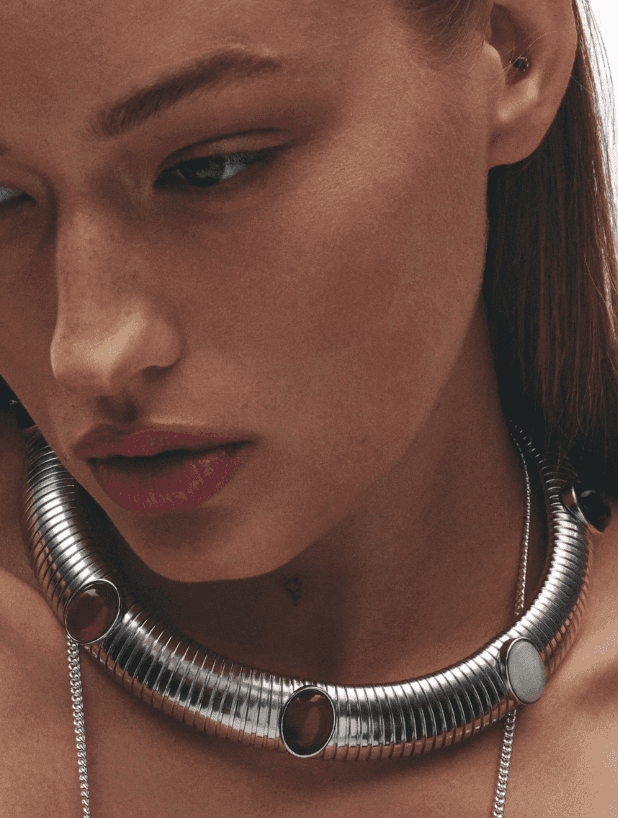
The visual bar is brutal. Jewelry is small, reflective, and detail-obsessed. Bad photography kills a $500 product instantly.
The price range is enormous. A $60 demi-fine ring and a $6,000 diamond piece need different funnels, different proof, and different patience.
A jewelry marketing strategy has to respect all five. Miss trust or visuals and the rest doesn't matter.
Positioning: fine vs. demi-fine vs. fashion
Before a single ad runs, get clear on where you sit. The tier defines your customer, your price defense, and your message.
Fine jewelry. Solid gold, platinum, natural diamonds and gemstones. High price, heirloom framing, deep trust requirements. The story is craftsmanship, provenance, and permanence.
Demi-fine. Gold vermeil, solid but lighter karat, lab-grown stones. The sweet spot for many DTC brands — real materials, accessible price, "everyday luxury" positioning.
Fashion jewelry. Plated, brass, costume. Trend-led, impulse-friendly, volume-driven. Closer to apparel in behavior.
Your tier changes everything downstream. Fashion jewelry can lean on impulse and trend cycles. Fine jewelry needs education, reassurance, and a longer nurture. Most brands know their tier intuitively but never translate it into the funnel — that's the gap a real strategy closes.
Product visuals at scale
A brand with 300 SKUs across four metals and six stone options faces a photography problem measured in thousands of variants. And jewelry is the least forgiving category to shoot — every scratch, reflection, and color shift shows.
You need three things:
A high visual bar. Macro detail, accurate color, on-model scale, and lifestyle context. Shoppers need to feel the weight and see how a piece sits on a hand or neck.
Volume. Enough assets to fuel paid social, product pages, email, and organic — refreshed constantly.
Efficiency. Reshooting every variant by hand doesn't scale. AI product photography and smart styling systems now generate on-model and lifestyle imagery across endless SKUs and colorways at a fraction of studio cost and time.
This is where disciplined product photography & styling becomes a growth input, not an overhead line. In jewelry, the asset is the ad. Weak visuals cap your ceiling no matter how good the targeting is.
The channel mix that works for jewelry
No single platform grows a jewelry brand. The mix matters because the category spans discovery, consideration, and high-intent search.
Meta (Facebook and Instagram)
Still the engine for DTC jewelry. Visual, broad, and built for both discovery and retargeting. Meta's automated buying — especially Meta Advantage+ Shopping for fashion — is strong for prospecting when your catalog and creative are ready. For a category-specific walkthrough, here's how to scale a jewelry brand with Facebook ads without wrecking margin.
Underrated for jewelry. It's a planning and gifting platform — people save engagement rings, anniversary gifts, and "someday" pieces. High intent, long consideration, perfect fit.
Google Shopping and Search
When someone types "gold huggie hoops" or "lab diamond tennis necklace," they're deep in the funnel. Shopping and Search capture demand you don't have to create. Essential for high-intent and branded terms.
TikTok
Discovery and trend velocity, especially for demi-fine and fashion tiers. Strong for younger buyers and viral moments — but it needs native, creator-led content, not repurposed studio ads.
The right split depends on your tier and price. Fine jewelry leans harder on Search, Pinterest, and retargeting. Fashion jewelry can push more into TikTok and Meta discovery.
Creators and UGC for trust
Trust is the gate, and nothing builds it faster than real people wearing your pieces. A polished studio ad shows the product. A creator video shows the product on a real wrist, in real light, with a real reaction — and that's what converts a hesitant, high-consideration buyer.
For jewelry specifically, creator and user-generated content does three jobs: it proves scale and quality, it demonstrates how pieces layer and style, and it borrows the creator's credibility. Building this as a repeatable system — not one-off gifting — is what separates brands that scale from brands that stall. A UGC and creator content engine gives you the volume of authentic, testable content that paid social demands. In a category where the customer needs reassurance before spending, proof-led content isn't optional.
The gifting calendar and retention
Roughly half of jewelry demand is gifting, and gifting is seasonal. Map the year and plan inventory, creative, and spend around it: Valentine's Day, Mother's Day, graduations, anniversaries, and the Q4 holiday run that can make or break the year. Miss the ramp and you miss the season — there's no catching up in December.
Gifting also changes who you're talking to. During peak windows, a large share of buyers are shopping for someone else — often a less-confident buyer who needs reassurance on sizing, materials, and returns. Build gift guides, "shop by price" edits, and clear gifting messaging for those windows, then plan the creative and inventory weeks ahead of each spike so you're ramping into demand, not chasing it.
Retention is the other half of the equation, and jewelry has a natural rhythm for it. A first-time buyer becomes a repeat customer through:
Self-purchase after gifting. She bought a gift, loved the brand, buys for herself next.
Collection building. Jewelry layers and stacks. One piece invites the next.
Occasion timing. Email and SMS flows that resurface around her anniversary or a new drop drive the second order.
The economics are the point: acquisition is expensive, so LTV is where jewelry brands win or lose. A gift-giver who becomes a loyal self-purchaser is worth many times the first order.
Measuring what matters
Jewelry's high AOV and long consideration mean you can't judge campaigns on last-click ROAS alone. Watch the numbers that reflect real profit:
AOV. High and defensible in jewelry — protect it. Bundling, stacking, and tiered gifting lift it further.
Contribution margin. Revenue minus product, shipping, and discount costs. Margin funds growth; guard it against discount-driven volume.
Repeat rate and LTV. The scoreboard for a considered-purchase category. First-order profit is often thin; the second and third orders make the model work.
Blended CAC and payback. Across all channels, how much to acquire and how fast you break even. Our new ad accounts average a 57-day break-even, and disciplined creative testing drives roughly 27% CAC reduction and about 40% ROAS improvement within three months.
Optimize to margin and LTV, not vanity revenue, and the strategy compounds.
What a jewelry marketing agency should own
A capable jewelry marketing agency doesn't just run ads. It owns the full system: positioning, a visual engine that scales across SKUs, the channel mix mapped to your tier, a creator pipeline, gifting-calendar planning, retention, and profit-first measurement.
The connective tissue is creative. In a high-visual, high-trust category, the brand with the best, most-tested creative wins the auction — which is why performance creative strategy sits at the center of how we grow jewelry brands. Volume plus discipline is the moat: Veicolo has launched 120K+ performance creatives and generated $400M+ in client revenue by treating creative as the growth lever, not the afterthought. For jewelry, that discipline turns a beautiful product into a scalable business.
FAQ
How is jewelry marketing different from other fashion marketing? Jewelry is a considered, emotional, often gifted purchase with a high visual bar and a wide price range. It needs more trust-building, a longer nurture, and stronger visuals than impulse-driven apparel.
Which channels work best for a jewelry brand? Meta for discovery and retargeting, Google Shopping and Search for high-intent demand, Pinterest for gifting and planning, and TikTok for trend-led discovery. The split depends on your tier and price point.
How important is product photography for jewelry? Critical. Jewelry is small, reflective, and detail-driven, so the asset often is the ad. Scalable, high-quality photography and styling across every SKU and variant is a growth input, not overhead.
How do I know my jewelry marketing is working? Track AOV, contribution margin, repeat rate, LTV, and blended CAC with payback — not last-click ROAS alone. Profit and repeat behavior are the real signals in a high-consideration category.
Key takeaways
Jewelry is a considered, emotional, gifted purchase — build trust and nurture, don't chase impulse.
Nail positioning first (fine, demi-fine, or fashion); it defines your funnel.
Visuals are the product's ad — scale high-quality photography across every SKU and variant.
Mix Meta, Pinterest, Google Shopping, and TikTok by tier, and use creators to build trust.
Plan around the gifting calendar and optimize to AOV, margin, and LTV.
Growing a fine or fashion jewelry brand? Talk to Veicolo and we'll build the full-funnel jewelry marketing strategy that scales your brand profitably.
Featured Case Study

304 %
Scaled Revenue MoM

4x ROAS
consistently over 6 months

125 %
YoY Meta Spend Growth

304 %
Scaled Revenue MoM
OUR APPROACH
Turning Performance Data
Into Profit Clarity
1. Profit-First Measurement
We start where most growth strategies stop: profit. Campaigns, channels, and products are evaluated against margin, contribution, and cash flow—not surface metrics.
2. Marketing Connected to the P&L
Performance data only matters when it maps to financial reality. We align ad spend, customer acquisition, inventory, and lifecycle value into a single decision-making system.
3. Continuous Financial Optimization
Growth isn’t a one-time model. We monitor performance as conditions change—traffic mix, demand, costs—so decisions stay profitable as you scale.




Want to get similar results?
Our Impact,
By The Numbers
RELATED ARTICLES