ARTICLES
Category:
Paid Ads Strategy
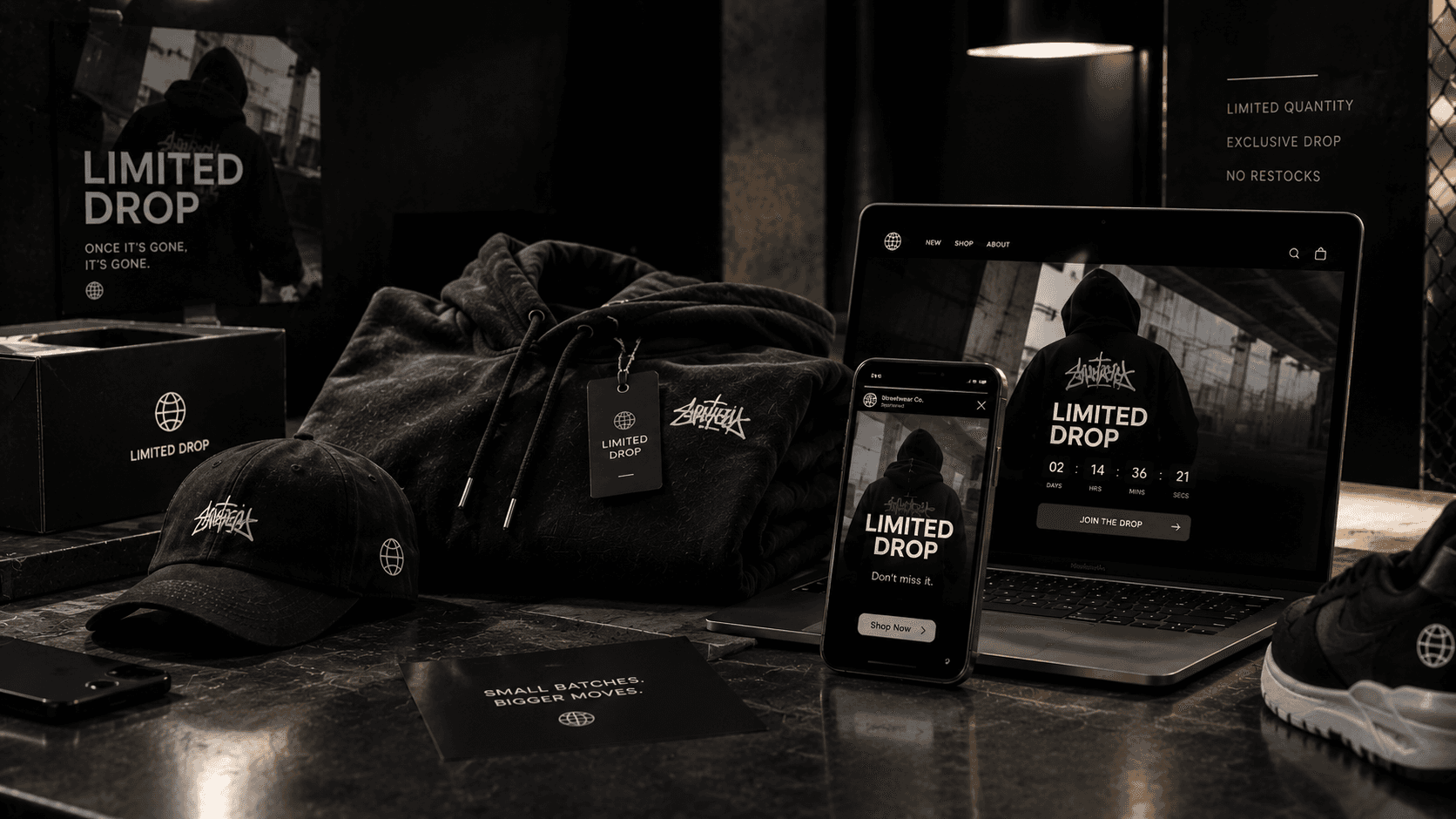
Streetwear operates on a different set of rules than the rest of fashion. A drop sells out in minutes, resale prices spike within hours, and the brands that master this cycle aren't just selling clothing. They're selling access to something scarce. Behind almost every viral streetwear launch is a deliberate mix of psychology and paid social strategy working together to create that feeling of urgency.
This is where streetwear hype marketing earns its place as a discipline of its own. It's not about flashy discounts or generic product ads. It's about engineering desire before a product even exists, then using performance creative to convert that desire into sales the moment a drop goes live. Brands that understand this rhythm turn every release into an event; brands that don't end up competing on price instead of culture.
This article breaks down how hype and scarcity actually work inside performance creative, why UGC has become the backbone of streetwear ad strategy, and how brands can structure campaigns that build long-term demand rather than one-off spikes.
What Makes Streetwear Hype Marketing Different From Traditional Fashion Ads
Traditional fashion advertising tends to sell a look. Streetwear advertising sells a moment. The anticipation before a drop, the race to cop it, and the social currency of having it before everyone else. That distinction shapes everything about how the creative is built.
The Psychology Behind the Drop Model
Limited releases work because they tap into loss aversion. The fear of missing out is a stronger motivator than the desire to gain something. When a streetwear brand announces a drop with a countdown, teaser content, and a hard cutoff, it's activating that psychological trigger deliberately. The scarcity isn't a side effect of production limits; it's the core of the marketing plan.
Community Before Conversion
Unlike a typical ecommerce funnel that pushes straight to a sale, streetwear hype marketing usually starts by building a community that feels like it belongs to something. Founders and designers show up on camera, collaborators get name-dropped early, and fans debate colorways in the comments long before checkout links go live. By the time the product drops, the audience has already emotionally invested, the ad is just the final nudge.
The Role of Scarcity in Streetwear Brand Ads
Scarcity isn't a single tactic. It shows up across every stage of a campaign, and understanding where to apply it is what separates a calculated drop from a gimmick.
Manufactured Scarcity vs Genuine Limited Runs
There's an important distinction between brands that genuinely produce limited quantities and those that simulate scarcity through marketing language alone. Audiences, especially in streetwear, are quick to spot the difference. Genuine scarcity: small batch sizes, one-time collaborations, numbered releases. Builds long-term trust. Manufactured scarcity that turns out to be restocked weekly erodes it just as fast.
How Scarcity Shows Up in Streetwear Brand Ads
Effective streetwear brand ads build scarcity signals directly into the creative and copy, not just the product page:
Countdown stickers and drops in language layered into Reels and Stories
Copy that states exact quantities (200 units, no restock) instead of vague urgency
Creative sequencing that shows a product selling out in real time via UGC reactions
Retargeting ads that shift tone from coming soon to almost gone as inventory drops
A Quick Comparison: Scarcity Tactics That Build Trust vs Erode It
Tactic | Builds Long-Term Trust | Risks Eroding Trust |
Numbered, limited production runs | Yes | – |
Countdown timers tied to real cutoffs | Yes | – |
Selling fast copy with no real inventory limit | – | Yes |
Frequent restocks of a limited item | – | Yes |
Transparent restock announcements when they happen | Yes | – |
The takeaway is simple: streetwear scarcity marketing only works long-term when the scarcity is real, or at least consistently and transparently applied. Once an audience feels tricked, no amount of clever creative wins them back.
Why UGC Has Become the Backbone of Streetwear Performance Creative
If hype gets attention and scarcity creates urgency, user-generated content is what makes both of those feel believable. Polished studio photography can showcase a product, but it rarely captures the energy of a real drop.
Why Streetwear UGC Outperforms Studio Content
Streetwear UGC unboxing clips, line-up footage outside a pop-up, fit checks filmed on a phone. The signals authenticity in a category where authenticity is the entire value proposition. Audiences trust peers over brands, and in streetwear specifically, the culture rewards content that looks like it came from inside the community rather than a marketing department.
This matters directly for paid performance: ads built around real UGC consistently earn stronger engagement and lower cost-per-click than polished, studio-only creative, because the format itself feels native to the platform rather than interruptive.
Turning UGC Into Scalable Ad Creative
Individual pieces of UGC are useful, but the real leverage comes from turning them into a repeatable creative pipeline:
Source content from real customers, collaborators, and micro-creators around each drop
Sequence clips to build a narrative arc anticipation, reveal, reaction, sell-out
Layer in scarcity messaging (unit counts, countdowns) on top of raw UGC footage
Test multiple UGC creators against each other to identify which voice converts best
Feed top-performing UGC back into retargeting to reinforce social proof at the point of purchase
Brands looking to formalize this kind of creative pipeline often benefit from a structured performance creative strategy that treats UGC sourcing and testing as an ongoing system rather than a one-off campaign task.
Structuring a Streetwear Hype Marketing Campaign From Teaser to Sell-Out
Bringing hype, scarcity, and UGC together requires a campaign structure that evolves as the drop date approaches, rather than a single static ad set running on repeat.
Pre-Drop: Building Anticipation
This phase leans on teaser content, collaborator reveals, and early-access signups. Paid media here should prioritize reach and community-building metrics over immediate conversions. The goal is to grow a warm audience ready to act the moment the drop goes live.
Drop Day: Converting Attention Into Sales
On drop day, creative shifts from anticipation to urgency. Real-time UGC, countdown overlays, and inventory-based copy replace the softer top-of-funnel storytelling. This is also where paid budget typically peaks, since the audience built pre-drop is now primed to convert within a tight window.
Post-Drop: Sustaining Momentum Without Overexposing the Brand
Once inventory sells out, the smartest streetwear brands don't go silent. They shift into recap content: sell-out announcements, resale market chatter, and behind-the-scenes footage from the drop itself. This keeps the brand relevant between releases and builds anticipation for the next one, which is central to any long-term streetwear hype marketing approach rather than a single-drop tactic.
For brands managing this kind of cyclical, high-intensity campaign structure, paid media advertising services built specifically around launch windows can help manage budget pacing so spend peaks exactly when the audience is most ready to convert.
Common Mistakes That Undercut Streetwear Hype Campaigns
Even brands with strong products and a real community can stumble on execution. A few recurring issues show up across the category:
Overusing scarcity language on products that always restock, which trains audiences to stop believing the urgency
Relying entirely on polished studio content, missing the authenticity that streetwear audiences expect
Failing to prepare the funnel for drop-day traffic spikes, leading to site crashes or checkout friction that undoes weeks of hype-building
Ignoring post-drop content, leaving a dead period between releases that lets community attention drift elsewhere
Inconsistent messaging across ad formats, where Stories feel raw and authentic but feed ads feel overly corporate
That last point connects to a broader issue many fashion brands face when the ad experience doesn't match the post-click journey. This look at how landing page experience affects return rates in fashion ecommerce is a useful reference, even outside streetwear, for understanding why consistency between ad and destination matters so much to conversion and trust.
Measuring Whether Your Hype Strategy Is Actually Working
Sell-out speed feels like the obvious success metric, but it can be misleading on its own. A drop can sell out quickly simply because the batch was too small, not because demand was exceptionally strong.
A more complete view of streetwear hype marketing performance looks at:
Time-to-sell-out relative to inventory size, to separate genuine demand from artificially tiny batches
Repeat purchase rate across drops, which indicates whether hype is converting into loyalty
Engagement-to-conversion ratio on UGC-based ads, showing whether authentic content is actually driving sales or just likes
Resale market activity, an indirect but telling signal of real scarcity and brand desirability
Waitlist-to-purchase conversion, measuring how well pre-drop anticipation translates into drop-day sales
Brands that track these signals consistently across drops, rather than judging each launch in isolation, get a much clearer picture of whether their hype strategy is building lasting brand equity.
Bringing Strategy and Execution Together
Hype and scarcity are powerful tools, but they only work when the creative, targeting, and funnel are built to support them consistently not just during a single viral moment. That's the gap many streetwear brands hit: they can create one successful drop, but struggle to systematize the process across every release.
Veicolo works with fashion and streetwear brands to build exactly this kind of repeatable system combining UGC sourcing, performance creative testing, and launch-specific paid media pacing so that every drop benefits from the same disciplined approach rather than starting from scratch.
Conclusion
The brands winning in streetwear right now aren't necessarily the ones with the biggest budgets. They're the ones who've turned hype and scarcity into a repeatable system rather than a lucky moment. Real streetwear scarcity marketing, backed by authentic streetwear UGC and disciplined streetwear brand ads, builds a cycle where every drop reinforces the next.
Getting this right takes more than a countdown sticker and a limited-quantity claim. It takes a creative pipeline, a paced media strategy, and a willingness to keep the audience engaged between drops, not just during them. Brands that treat streetwear hype marketing as an ongoing system rather than a one-time campaign trick. They are the ones building the kind of loyalty that turns a single sell-out into a lasting brand.
FAQs
Why do some streetwear drops sell out in minutes while others don't move at all?
It usually comes down to pre-drop anticipation and authentic scarcity. Brands that build real community engagement before launch convert that attention into fast sell-outs.
Is manufactured scarcity ever a good strategy for streetwear brands?
Rarely long-term. Audiences quickly notice inflated urgency, and repeated restocks of supposedly limited items damage trust faster than slower, more transparent releases.
How much of a streetwear ad budget should go toward UGC versus studio content?
Many successful brands lean heavily on UGC, often 60-70% of creative spend, since authentic content typically outperforms polished studio ads in engagement and cost efficiency.
Does hype marketing work for streetwear brands without a cult following yet?
Yes, but it starts smaller building a tight, engaged community around early drops before scaling scarcity tactics that depend on an already-warm audience.
What's the biggest mistake new streetwear brands make with scarcity marketing?
Claiming urgency that isn't real. Once shoppers realize a limited drop restocks constantly, they stop reacting to future scarcity messaging altogether.
Featured Case Study


304 %
Scaled Revenue MoM


4x ROAS
consistently over 6 months


125 %
YoY Meta Spend Growth


304 %
Scaled Revenue MoM
OUR APPROACH
Turning Performance Data
Into Profit Clarity
1. Profit-First Measurement
We start where most growth strategies stop: profit. Campaigns, channels, and products are evaluated against margin, contribution, and cash flow—not surface metrics.
2. Marketing Connected to the P&L
Performance data only matters when it maps to financial reality. We align ad spend, customer acquisition, inventory, and lifecycle value into a single decision-making system.
3. Continuous Financial Optimization
Growth isn’t a one-time model. We monitor performance as conditions change—traffic mix, demand, costs—so decisions stay profitable as you scale.




Want to get similar results?
Our Impact,
By The Numbers
RELATED ARTICLES