ARTICLES
Category:
Paid Ads Strategy

Most DTC fashion marketing advice quietly assumes the customer is shopping for women's fashion.
The playbook usually looks familiar: launch frequent creative variations, lean heavily into trend-led content, use lifestyle imagery, push new collections, build influencer campaigns, and optimize Meta Ads around quick purchase signals.
That can work.
But menswear brands often operate differently.
The customer journey can be more deliberate. Product evaluation tends to involve fit, fabric, durability, versatility, and repeat usability. A man may not want five new outfits every season, but he may become an extremely valuable customer once he trusts a brand's fit and product quality.
That creates a different growth problem.
Menswear DTC marketing isn't simply women's fashion marketing with male models.
The strongest men's fashion brands build their acquisition, creative, merchandising, retention, and measurement systems around how men actually discover, evaluate, buy, and repurchase clothing.
This guide explains what needs to change—and how menswear brands can build a more profitable ecommerce growth strategy.
Why Traditional Fashion Marketing Playbooks Don't Always Work for Menswear
The first mistake is assuming that every fashion category responds to the same marketing mechanics.
Menswear has several characteristics that make the customer journey different.
For example, fit can become a major purchase barrier. A customer may like the product but hesitate because he doesn't know whether the shirt will fit across the shoulders, whether trousers will have the right taper, or whether a jacket will work with clothes he already owns.
Product education therefore matters.
So does trust.
A men's fashion brand may also have fewer obvious purchase occasions than a women's fashion business with a much broader assortment of categories and trend cycles. That means customer lifetime value, repeat purchase behavior, product breadth, and cross-selling can become particularly important.
Instead of asking:
"How do we get more people to click our ads?"
a better question is:
"How do we make the first purchase easy enough that it creates a customer relationship?"
That shift changes the entire marketing strategy.
For a broader look at how fashion brands should think about acquisition and retention together, Veicolo's guide on full-funnel marketing for fashion brands is a useful companion.
1. Sell the Product's Function, Not Just the Look
One of the biggest opportunities in menswear ecommerce marketing is product functionality.
A beautiful campaign image can create attention, but attention isn't always enough to overcome purchase hesitation.
Menswear customers often want to know:
How does it fit?
What is the fabric?
Is it breathable?
Does it wrinkle easily?
Can I wear it to work?
Can I dress it up or down?
How does the sizing compare with other brands?
Is it worth the price?
Your creative should answer these questions before the customer reaches the product page.
For example, instead of an ad showing only a model wearing a premium overshirt, test a sequence such as:
Hook: "The overshirt you can wear three ways."
Then demonstrate:
Office styling
Weekend styling
Evening styling
The product becomes more than an aesthetic object. It becomes a solution.
This is especially important for premium menswear, where customers need a clear reason to justify a higher price.
2. Build Men's Fashion Brand Ads Around Specific Buying Motivations
Generic fashion ads often say:
"New collection."
That isn't necessarily a strong reason to buy.
Menswear brands can create more persuasive advertising by organizing creative around specific customer motivations.
The five creative angles worth testing
Fit
Show the garment from multiple angles and explain the cut.
Fabric
Demonstrate texture, weight, stretch, breathability, or construction.
Versatility
Show one product being worn across multiple occasions.
Proof
Use customer reviews, UGC, testimonials, creator demonstrations, and real-world wear.
Identity
Connect the product to a lifestyle or personal identity.
This approach creates a stronger menswear growth strategy because you're not relying on one generic brand message.
You are building a library of hypotheses.
That is where creative testing becomes critical.
Veicolo's creative testing framework for fashion brands emphasizes structured testing rather than repeatedly betting on one "winning" ad. The same principle is especially valuable for menswear because different products can require completely different selling angles.
3. Stop Treating Meta as a Targeting Problem
For years, fashion advertisers focused heavily on audience segmentation.
Interest A versus Interest B.
Lookalike A versus Lookalike B.
Broad versus stacked interests.
But modern men's fashion brand ads increasingly depend on the quality of the creative signal being provided to the platform.
The question isn't only:
"Who should see this ad?"
It is:
"What does this ad tell the algorithm about the customer who is likely to respond?"
A video showing a technical jacket being tested in rain sends a different signal from a polished studio image.
A customer testimonial sends a different signal from a celebrity campaign.
A "3 ways to style it" video sends a different signal from a discount ad.
This is why creative strategy and media buying should not operate as isolated departments.
Veicolo's approach to Meta Ads for fashion brands similarly focuses on combining creative, targeting, optimization, and storytelling rather than treating Meta Ads as a simple media-buying exercise.
4. Make Fit Content a Conversion Asset
Women's fashion has spent years developing sophisticated visual merchandising around fit, styling, body types, and product demonstrations.
Menswear brands can borrow the principle without copying the playbook.
Fit should become a content system.
For every major product, consider showing:
Model height and size
Garment measurements
Fit type
Multiple body types
Front, side, and back views
Close-ups of construction
Comparison between sizes
Styling examples
This content should appear across ads, product pages, organic social, email, and UGC.
Why?
Because the same objection can appear at multiple stages of the funnel.
A prospect might see an Instagram ad and wonder about sizing.
A retargeting visitor might abandon because he isn't sure about fit.
A product-page visitor might need visual proof before purchasing.
A good menswear ecommerce system answers the objection everywhere.
5. Use UGC Differently
UGC is often associated with beauty, skincare, and women's fashion because those categories have developed enormous creator ecosystems.
Menswear brands shouldn't simply copy the same UGC format.
Instead, focus on credibility and demonstration.
A strong men's fashion creator might say:
"I've worn this shirt for three weeks. Here's what I like about it."
Then show:
The fit
The fabric after washing
How it looks tucked and untucked
How it works with jeans
How it works with trousers
How it looks after a full day
That feels less like an advertisement and more like product validation.
Veicolo's UGC and creator content engine for fashion brands is aligned with this broader idea: creator content works best when it becomes part of a repeatable performance system rather than a one-off influencer campaign.
6. Build the Funnel Around the Men's Buying Journey
A profitable menswear growth strategy needs more than acquisition.
Think about the funnel in four stages.
Stage 1: Discovery
The goal is to make the brand recognizable.
Creative can focus on:
Lifestyle
Product differentiation
Strong visual identity
Founder story
Category education
Problem/solution hooks
Stage 2: Consideration
Now answer the questions that stop people from buying.
Show:
Fit
Materials
Reviews
Product comparisons
Demonstrations
Styling
FAQs
Stage 3: Conversion
Reduce friction.
Use:
Clear sizing
Shipping information
Returns
Reviews
Social proof
Product guarantees
Strong PDP merchandising
Stage 4: Retention
The first purchase shouldn't be the finish line.
Use email and SMS to introduce complementary products, educate customers about care, announce new drops, and encourage the next purchase.
This is where lifecycle marketing becomes particularly valuable.
Veicolo's D2C fashion email marketing framework highlights the importance of automated flows, revenue per email, flow revenue share, and repeat purchase rate instead of relying on superficial engagement metrics.
7. Think in Outfits, Not Individual SKUs
One of the strongest opportunities in men's fashion ecommerce is increasing the economic value of each customer.
Imagine someone buys a premium overshirt.
The next marketing question shouldn't simply be:
"How do we sell another overshirt?"
It should be:
"What completes the wardrobe?"
That could be:
T-shirt
Trousers
Chinos
Shoes
Jacket
Accessories
This creates a merchandising ecosystem.
It can also increase average order value.
For fashion brands looking to improve basket economics, Veicolo's guide on increasing average order value in fashion provides a useful framework around bundles, cross-selling, and product strategy.
8. Don't Scale Ad Spend Before You Understand Your Economics
This is where many menswear brands get into trouble.
An ad can produce a 3X ROAS and still be economically weak.
Suppose a product sells for $150.
After product cost, shipping, discounts, payment fees, returns, and fulfillment, the contribution margin may be much lower than the headline revenue suggests.
Now add customer acquisition cost.
The real question becomes:
Does acquiring this customer create profitable contribution—and does the customer have enough future value to justify the acquisition cost?
That means menswear brands should monitor:
CAC
Contribution margin
Average order value
Repeat purchase rate
Customer lifetime value
MER
New customer revenue
Returning customer revenue
Product-level profitability
This is consistent with Veicolo's broader profit-first approach to DTC growth, where marketing decisions are connected to margin and financial performance rather than platform-reported ROAS alone.
9. Build Creative Around Products, Not Campaign Calendars
Another common mistake is creating ads only when a campaign launches.
That's backwards.
A growing menswear brand should have an ongoing creative pipeline.
For every important product, develop multiple angles:
Product angle:
"What makes this fabric different?"
Problem angle:
"Your work shirt shouldn't feel like a uniform."
Transformation angle:
"From office to dinner in one layer."
Proof angle:
"Why 1,000+ customers keep buying our shirts."
Comparison angle:
"Cheap cotton vs. heavyweight cotton."
Founder angle:
"Why we spent 18 months developing this fit."
UGC angle:
"I've worn this for 30 days. Here's what happened."
The goal isn't to make more ads for the sake of volume.
The goal is to discover which customer motivations consistently produce profitable demand.
Veicolo's performance creative strategy for fashion brands takes a similar position: fashion growth requires creative iteration, channel-specific execution, and continuous optimization.
10. Use Retention to Make Acquisition More Profitable
Menswear brands don't necessarily need customers to purchase every few weeks.
They need customers to remember the brand when the next relevant purchase happens.
That makes lifecycle marketing incredibly important.
A simple retention system could include:
Welcome flow:
Explain the brand, product philosophy, fit, and bestsellers.
Post-purchase flow:
Explain care, styling, and how to get more value from the product.
Cross-sell flow:
Recommend products that complement the original purchase.
Back-in-stock flow:
Bring customers back when popular sizes return.
New collection flow:
Introduce relevant products based on previous purchases.
Win-back flow:
Reconnect with customers after a meaningful period of inactivity.
The goal isn't to email customers constantly.
It's to make the next purchase more relevant.
And that can lower the effective cost of growth because the brand isn't dependent on paid acquisition for every order.
The Menswear DTC Marketing Playbook That Actually Makes Sense
The alternative to the women's-fashion playbook isn't creating an entirely separate marketing universe.
It's adapting the fundamentals to the economics and psychology of menswear.
A strong menswear DTC marketing system looks like this:
1. Product-first positioning
Explain why the product deserves attention.
2. Fit-first merchandising
Remove uncertainty around sizing and fit.
3. Demonstration-led creative
Show the product being used, worn, tested, and styled.
4. Structured creative testing
Test hooks, formats, messages, creators, and product angles continuously.
5. Full-funnel acquisition
Connect discovery, consideration, conversion, and retention.
6. Profit-first measurement
Optimize for contribution, CAC, LTV, and MER—not vanity metrics.
7. Lifecycle retention
Use email and SMS to increase repeat purchase and customer value.
8. Wardrobe-based merchandising
Turn individual products into collections of complementary purchases.
Final Thoughts
The biggest opportunity in menswear ecommerce marketing isn't finding a secret Meta Ads trick.
It's recognizing that men's fashion has different purchase dynamics.
A customer may need more education before buying. Fit may matter more than trend. Product functionality can be a stronger selling point than novelty. And once trust is established, the opportunity to build a long-term wardrobe relationship becomes extremely valuable.
That means the best menswear growth strategy connects creative, merchandising, paid media, conversion optimization, and retention into one system.
Don't copy the women's fashion playbook.
Take the principles that work—strong creative, compelling storytelling, creator content, paid acquisition, lifecycle marketing—and rebuild them around the actual reasons men buy clothing.
That's how a menswear brand moves from simply generating orders to building a scalable DTC growth engine.
FAQs
What is menswear DTC marketing?
Menswear DTC marketing is the direct-to-consumer strategy used by men's clothing brands to acquire, convert, and retain customers through channels such as Meta Ads, Google, social media, email, SMS, creators, SEO, and their own ecommerce store.
How is menswear ecommerce marketing different from women's fashion marketing?
Menswear often requires greater emphasis on fit, product functionality, versatility, durability, and trust. Instead of relying primarily on trend-driven creative, brands can benefit from product demonstrations, educational content, UGC, reviews, and wardrobe-based merchandising.
What type of ads work best for men's fashion brands?
There isn't one universal format. Strong menswear ads typically test product demonstrations, fit-focused videos, UGC, lifestyle creative, problem-solution hooks, testimonials, comparisons, and styling content. Continuous creative testing helps identify which angles produce profitable customers.
What metrics should menswear DTC brands track?
Beyond ROAS, brands should monitor customer acquisition cost, contribution margin, average order value, repeat purchase rate, customer lifetime value, MER, new versus returning customer revenue, and product-level profitability.
How can a menswear brand increase repeat purchases?
Brands can use post-purchase education, complementary product recommendations, personalized email and SMS, back-in-stock campaigns, new-product launches, loyalty programs, and wardrobe-based cross-selling to create more reasons for existing customers to return.
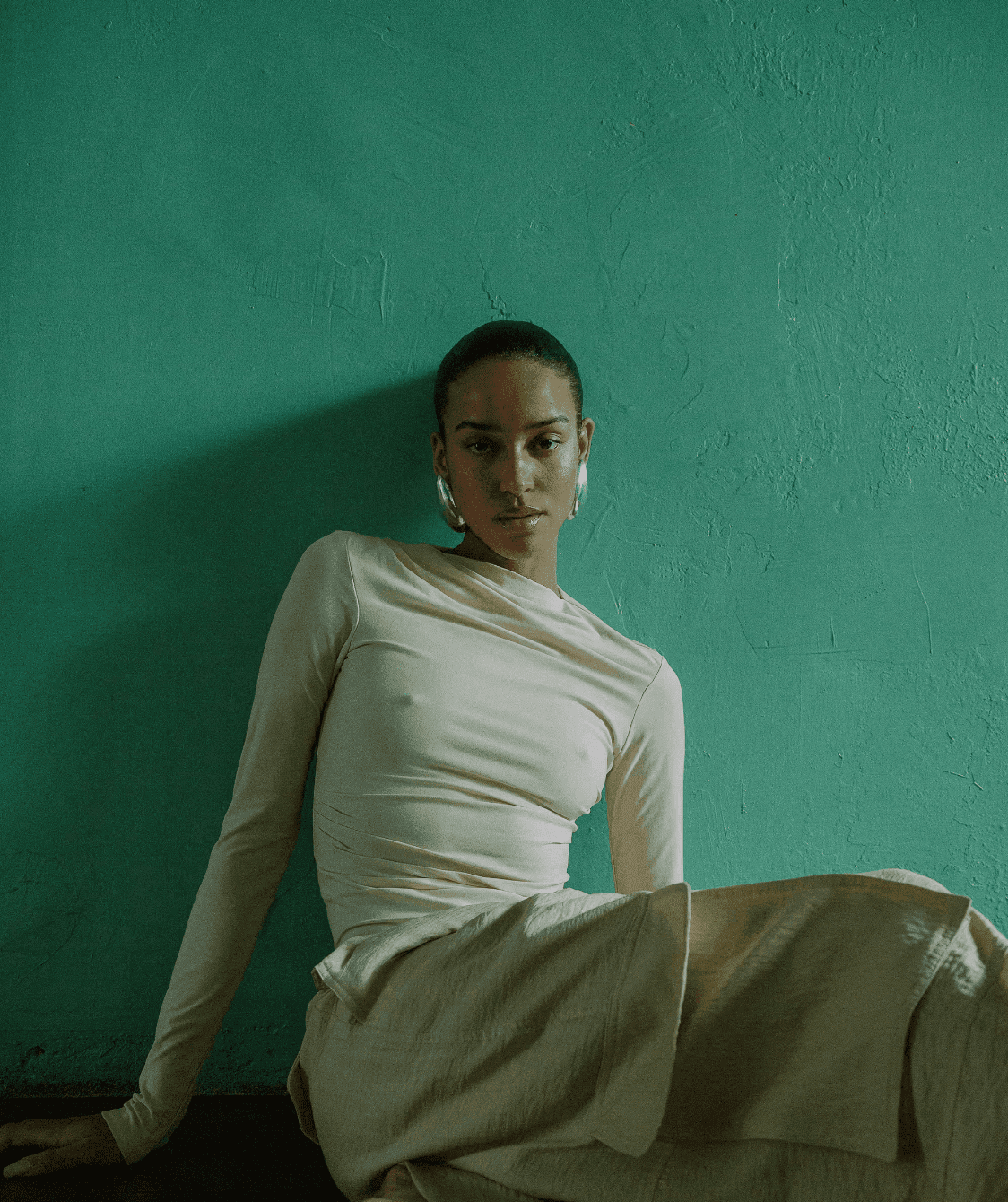
Featured Case Study

304 %
Scaled Revenue MoM

4x ROAS
consistently over 6 months

125 %
YoY Meta Spend Growth

304 %
Scaled Revenue MoM
OUR APPROACH
Turning Performance Data
Into Profit Clarity
1. Profit-First Measurement
We start where most growth strategies stop: profit. Campaigns, channels, and products are evaluated against margin, contribution, and cash flow—not surface metrics.
2. Marketing Connected to the P&L
Performance data only matters when it maps to financial reality. We align ad spend, customer acquisition, inventory, and lifecycle value into a single decision-making system.
3. Continuous Financial Optimization
Growth isn’t a one-time model. We monitor performance as conditions change—traffic mix, demand, costs—so decisions stay profitable as you scale.




Want to get similar results?
Our Impact,
By The Numbers
RELATED ARTICLES